
Ann, Arjun, and I traveled to Cavan today to visit Grandpa B.J.’s family tree, most of which was uprooted long ago when family emigrated to New York. But today we discovered an important memorial that connects our American family to shared roots, now resting forever in Cavan.
I’ll write this post as a guide for Arjun but also as a summary for family back home who may find this interesting. Ann and I are trying to piece together our family story rooted in Cavan and what’s summarized below is a small thread of a much larger family tapestry.
Some family tree and geographic context
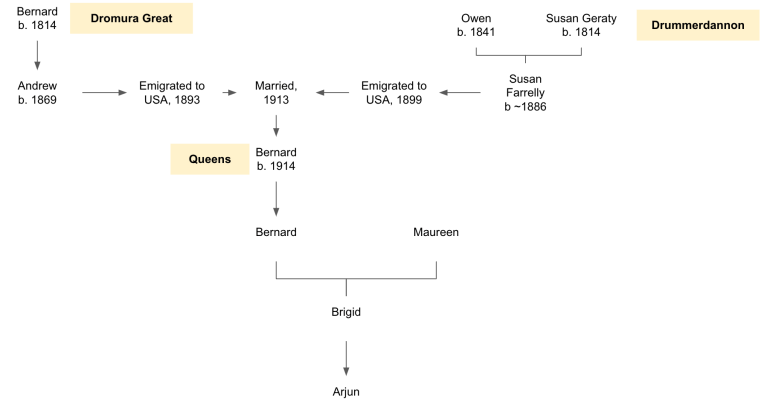
Grandpa’s family tree is rooted in two families: the Leddy’s from Drumora and the Farrelly’s from Drumerdannan. “Drum” means “hill” in Irish, hence the word “drum” is embedded in many place names throughout Cavan, a hilly area loaded with lakes, a remnant of the last ice age when glaciers slid south into northern Ireland. Here is the family tree, mapped by genealogy:
Drumora and Drumerdannan are “townland” names, or neighborhoods. The two nearest proper towns are Killashandra (a small town) and Cavan Town (a slightly larger town and government center of the county). Here are all of these place names, mapped (interact with this map here to zoom in or out, or just view it on the picture below).
- Killashandra
- Drumora (home of the Leddy’s, Dad’s grandfather, Andrew)
- Cavan Town (home of the county government and Saint Patrick’s Cathedral)
- Drumlane Abbey and where our cousins are laid to rest in the Drumlane Cemetery
- Drumerdannan (home of the Farrelly’s, Dad’s grandmother, Susan)

Killashandra
In the 1980s, Grandpa shared with us that when he was growing up in the 1950s, that his father (Bernard Leddy, the NYC firefighter) taught a sing-song memory key in the 1920s that he had learned from his mother, Susan Farrelly. The song was to help the Leddy-Farrelly kids never forget where they came from in Ireland. She taught them: “You’re from Drumerdannan, Killashandra, County Cavan, Ireland.” This is a great byte-sized example of oral history because in 1968 when Grandpa went back to Ireland with Mosie, they went to Killashandra, stopped into a local pub, and asked about the Farrelly’s from Drumerdannon. They were led to Jimmy and Charlie Farrelly, Susan’s nephews and Grandpas’s cousins, who were still in the family home. We met Jimmy and Charlie in the 1980s and saw them once or twice over the years (Jimmy would at one point visit America in the 1980s) but we lost touch after that and they have since passed away. Jimmy and Charlie were thus very much on our minds today as we planned our day to visit.
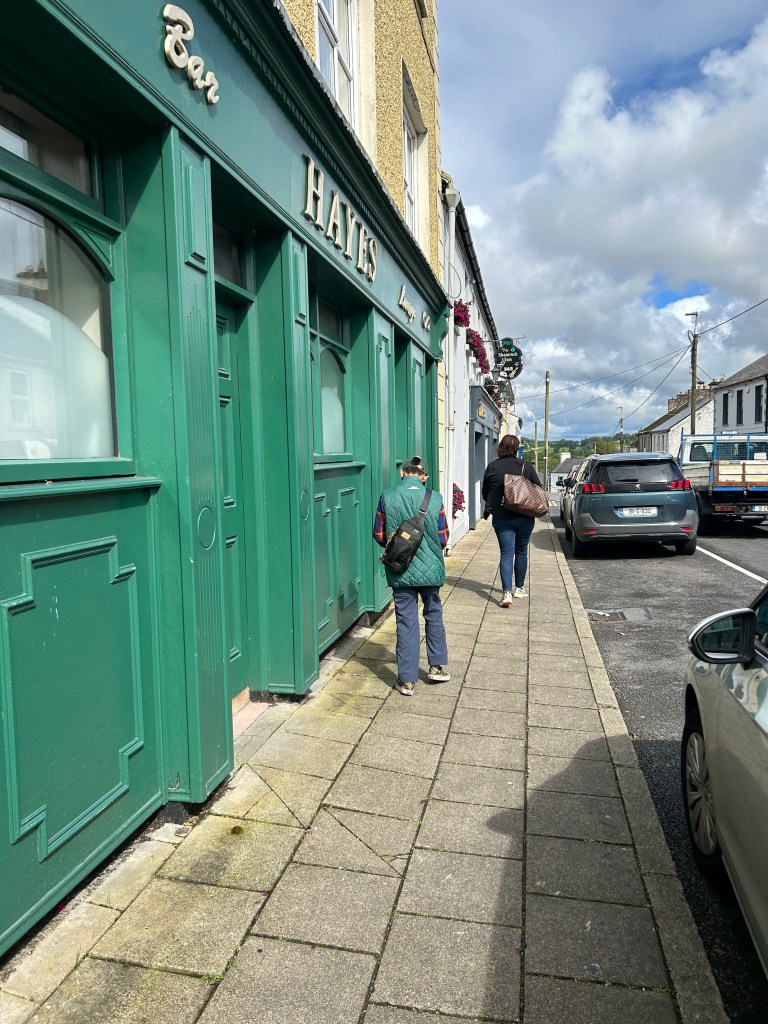
So our first stop was Killashandra; it is a small, quiet town that looks very much the way it did in the 1980s. Few shops were open. We would learn later that the town was hit hard by the 2007-08 economic crisis and saw an exodus of residents at that time. But there was a fantastic coffee shop called “Fika 33” on the main road where we enjoyed lattes and pastries as we plotted out our day on Google Maps. Afterwards, we took a picture on the street for posterity to share with Mosie and Grandpa.

We then headed south to Drumora.
Drumora
Grandpa’s grandfather, Andrew Leddy, was from Drumora. This side of the family tree also connects us to Frank and Alice; Frank’s grandfather (Patrick) and Grandpa’s grandfather (Andrew) were brothers. Interestingly, we can see Patrick on the Irish census records in 1901, still in Ireland with their father, Bernard, who was 87 at the time:

Andrew is not in these census records because he had already emigrated to NY, around 1893; Patrick would later move to New York as well, fully uprooting the Leddy family tree from Drumora.
All this history confirmed, Ann and I were still committed to trying to at least stand where they came from; how could we not do at least that? So we used a map provided by Mosie that she and Grandpa had used in 1984 … it helped us cross-reference the site in 2023 with Google Maps to find the site:
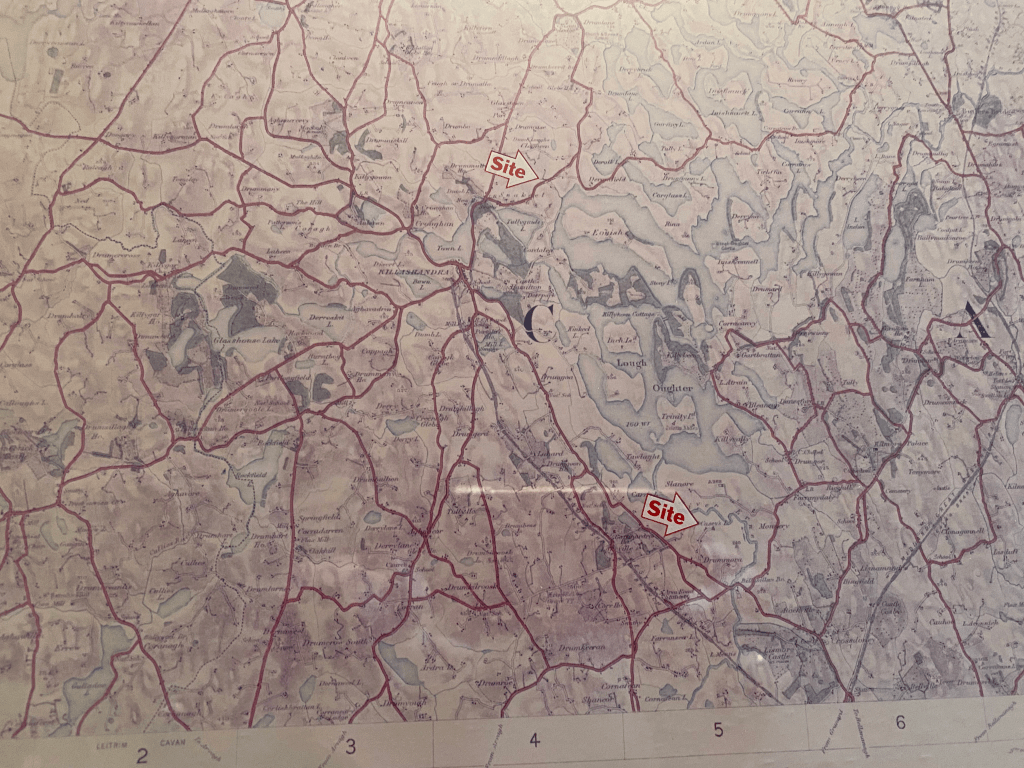
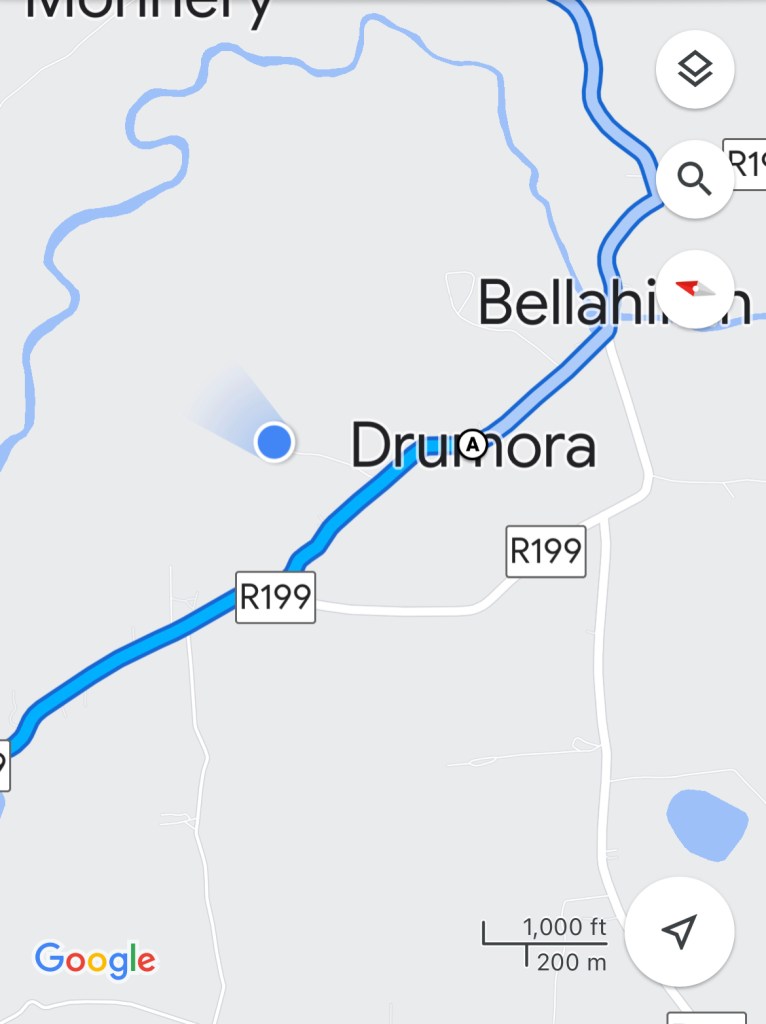
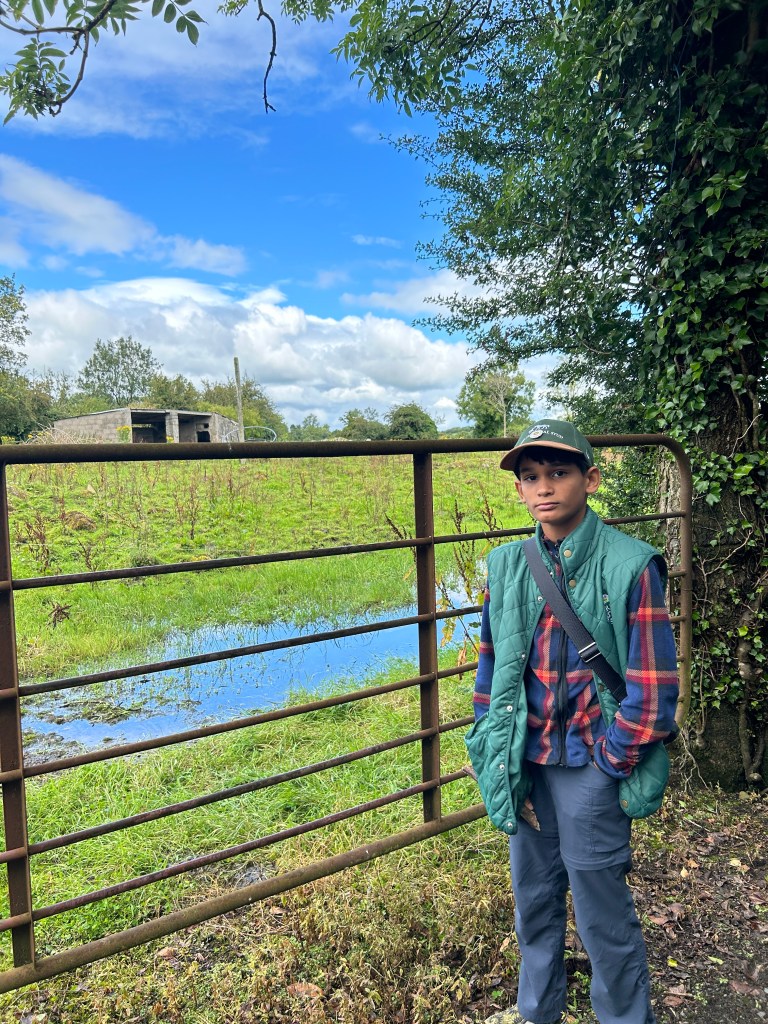
There was not much to see at Drumora; it was a small residential farm road with homes and lives that are playing out where the Leddy’s once lived. But, for posterity, I had Arjun pose near the end of the road, where we imagined Andrew Leddy – Arjun’s great-great-grandfather – perhaps once stood.
Then we went moved on to Cavan Town.
Cavan Town
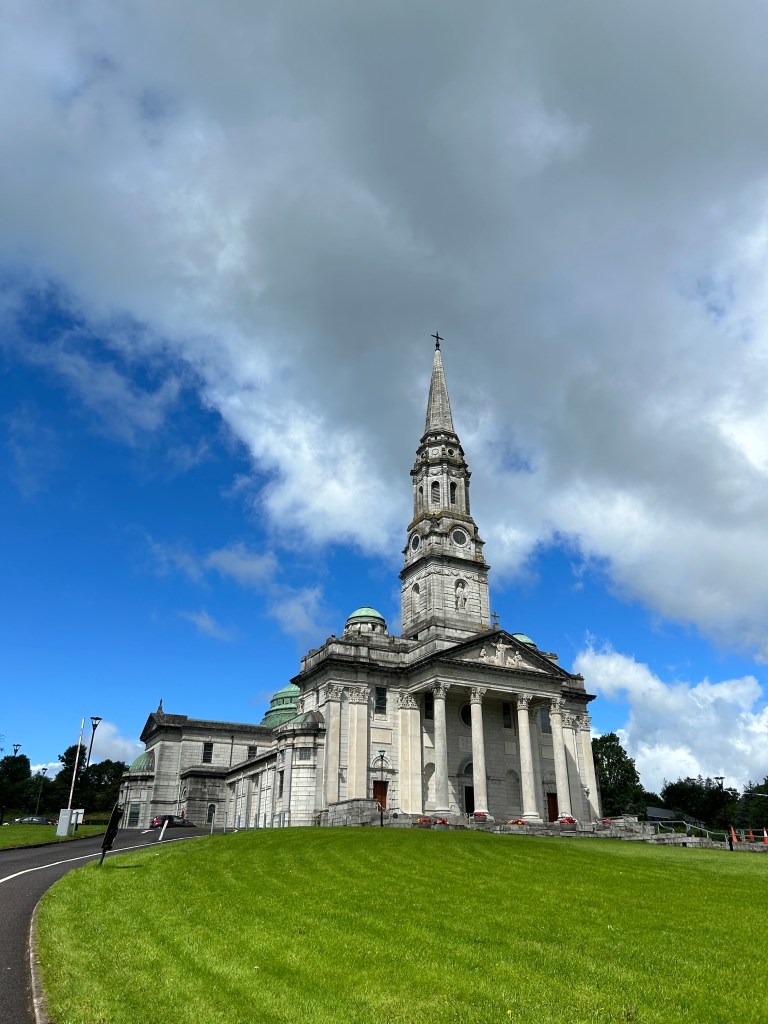
Our hope with Cavan Town was to visit the Johnson Central Library and research possible leads on other family records (like grave sites) but we quickly found the library was closed for a bank holiday (while disappointed, we were heartened to see that the library offers a Genealogy/Family History Centre). In lieu of the library, we walked up to the road to towards the Cathedral of Saint Patrick, situated on the town’s upward sloping hilltop. It is an impressive structure from the 1940s and an active parish to this day.
Along the main street in Cavan we also saw a statue for the Irish Republican Army from 1922 outside the Cavan Town Council building. Arjun has been learning a lot about the 1916 Easter Rising and subsequent Civil War on this trip and so this was an interesting reference to the local Cavan context of those events.

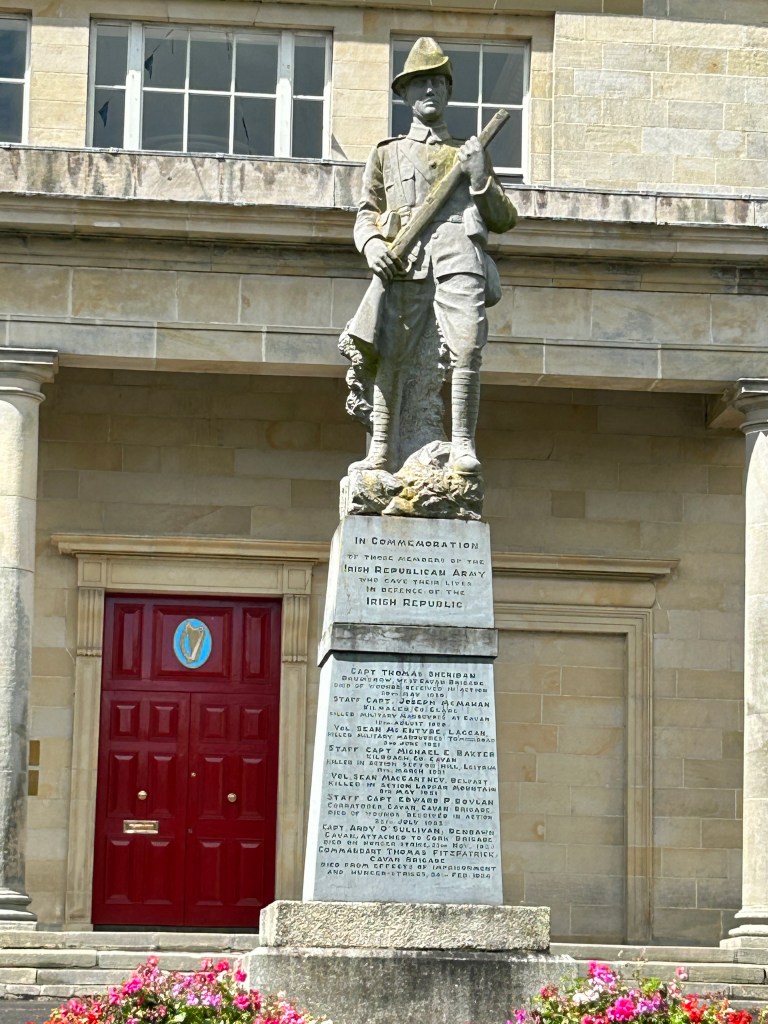
Departing Cavan, we then headed to Drumlane Abbey where new surprises awaited.
Drumlane Abbey
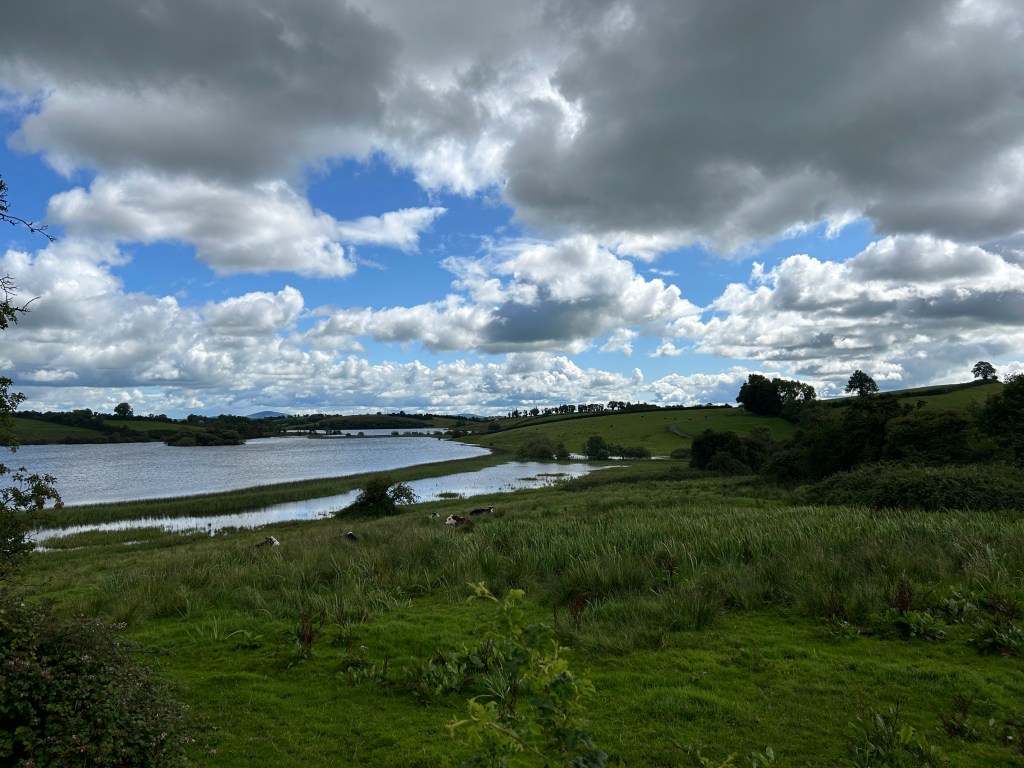
Our B&B host had recommended that we stop by here on our day trip so we did. The overall view at the site was stunning in a “take your breath away” sense of the word. There was an ethereal quality to the sunshine the lake was like a giant shining jewel under the sky. The camera cannot do it justice but this picture gives a sense:
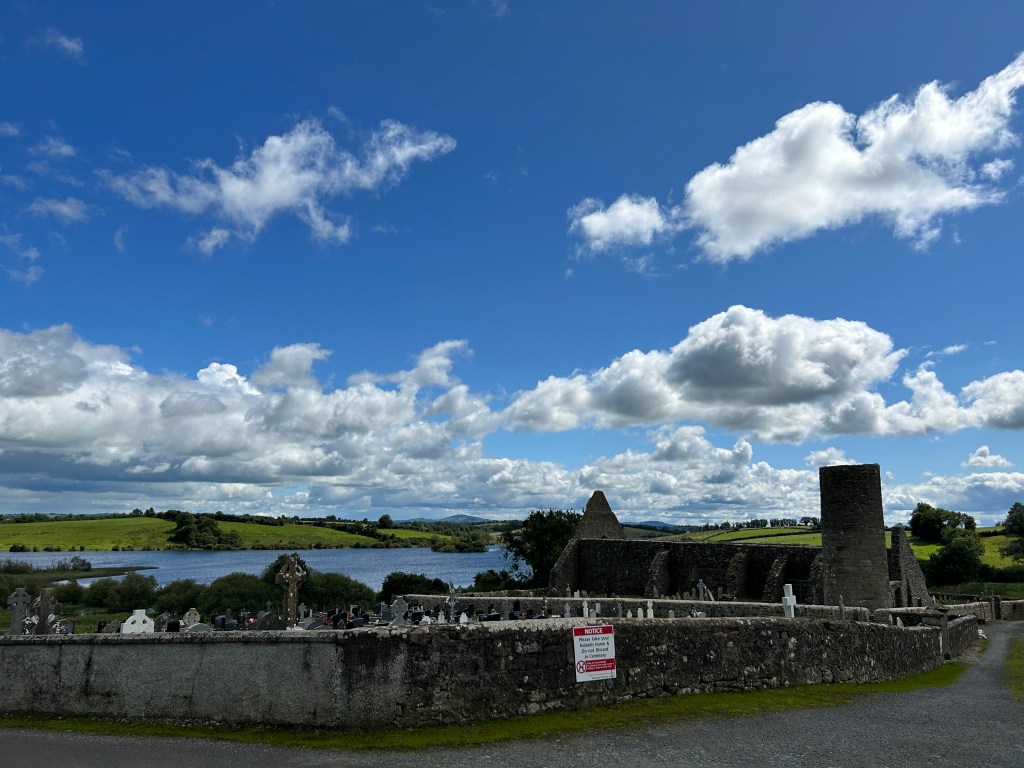
Drumlane Abbey is dates back to 500 A.D. The ruins that exist today date back to 1200 A.D., having weathered Vikings, clan wars, and obsolescence as a monastic enclave. Today, local civic authorities are embarking on a slow-going preservation effort.

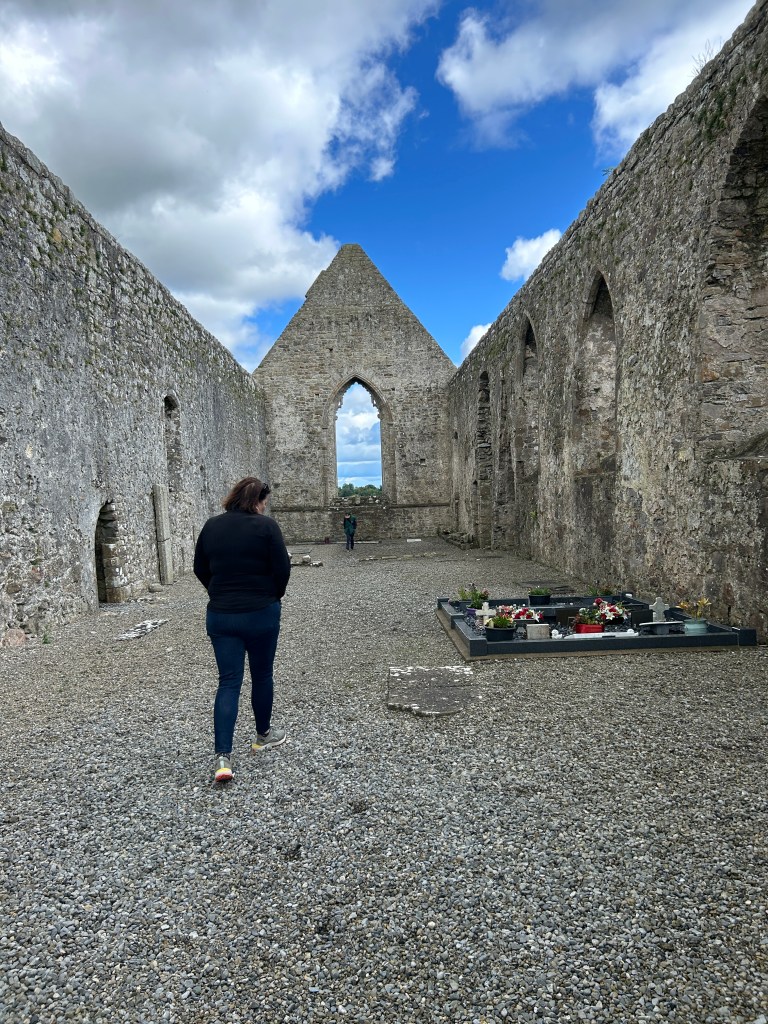
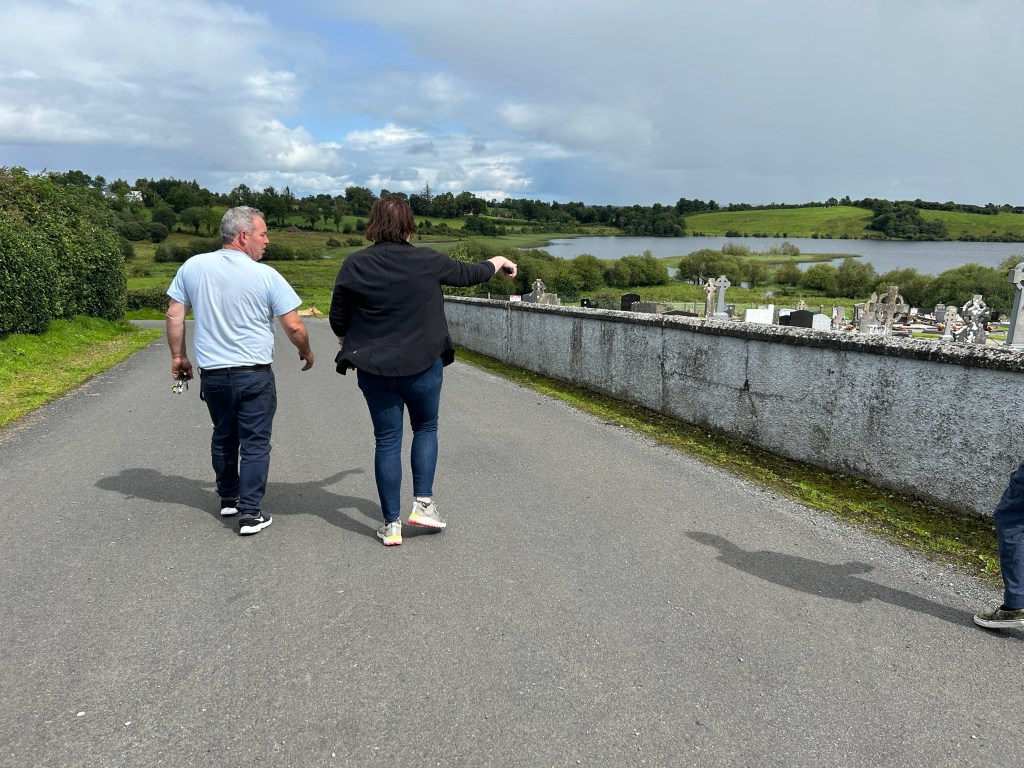
Perhaps more notable and interesting to us, however, was the cemetery that sits just outside the abbey’s ancient walls. This cemetery is actively used, evidenced by fresh flowers, votives, and mementos that line the many graves. We were moved by the many memorials and stories that unfold around the gravestones, for young and old alike, and we would later find out that Drumlane shares common, modern-day stories of suffering: loss of young and old from illness, addiction, car crashes, suicide, and more.
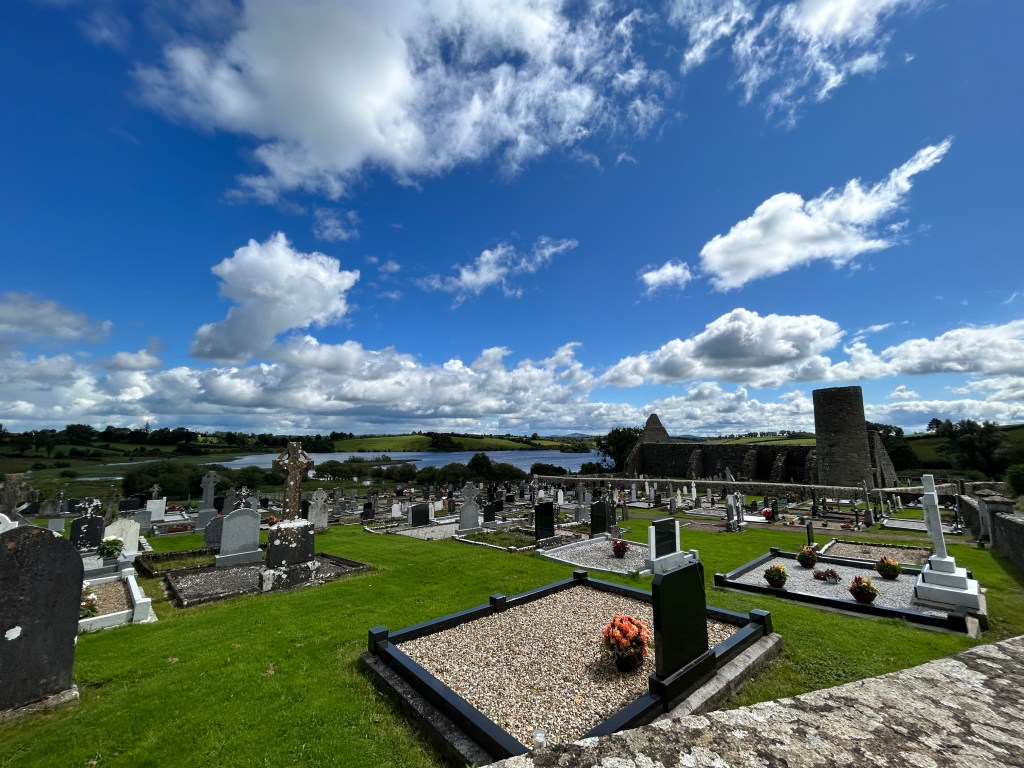
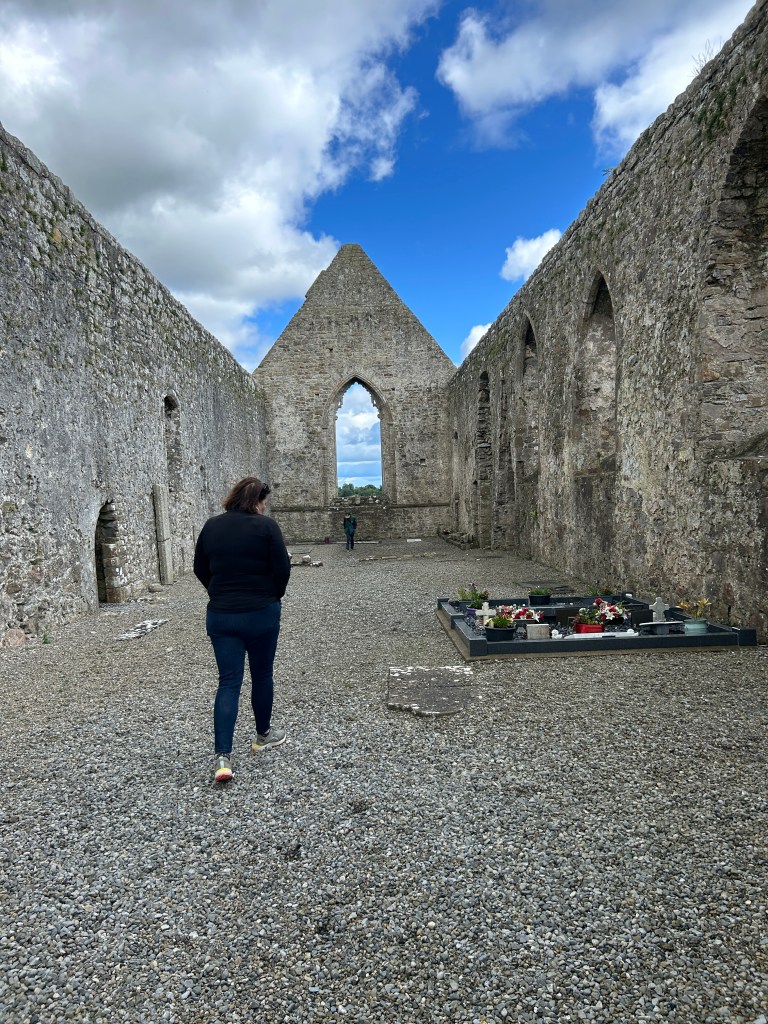

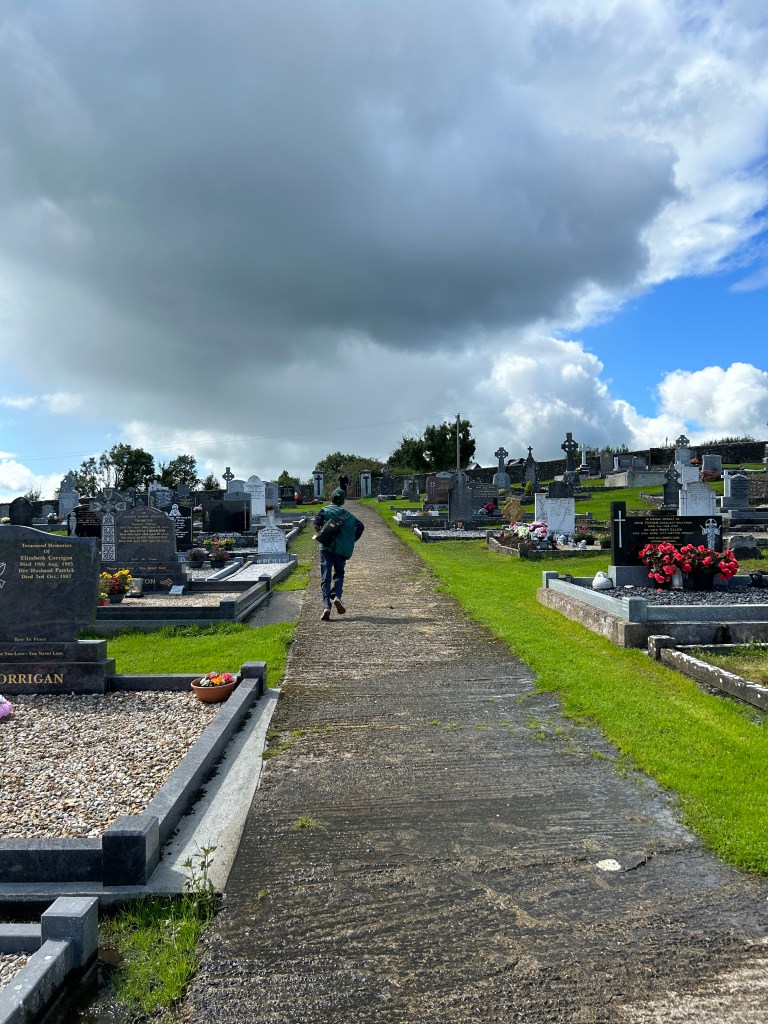
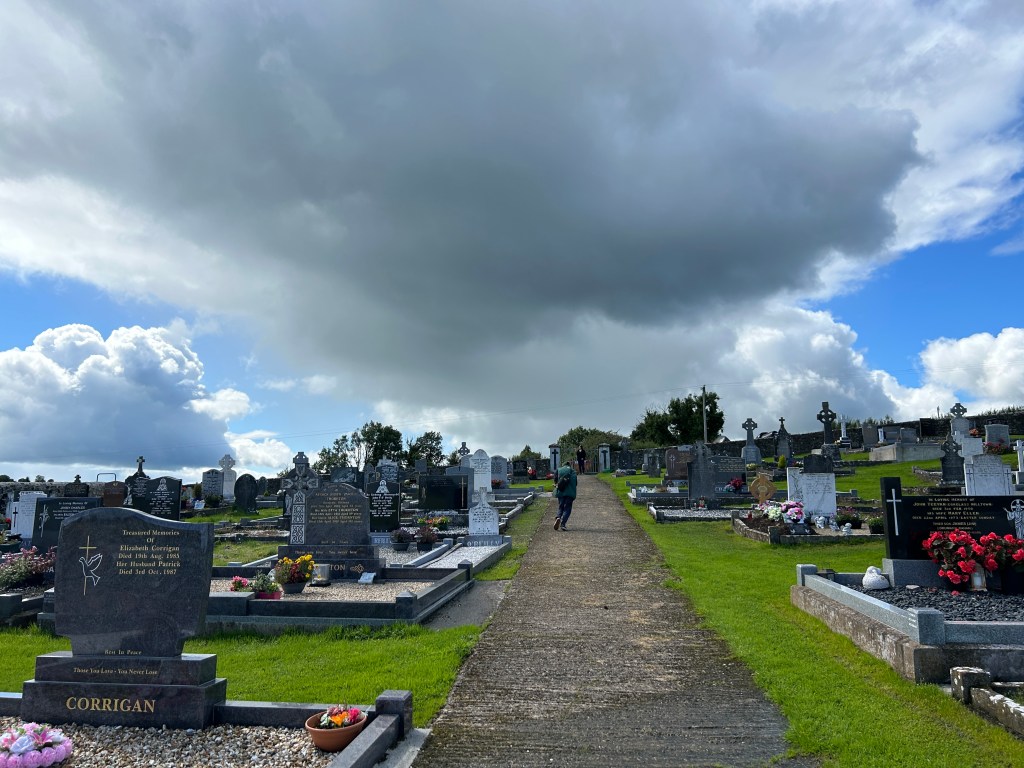
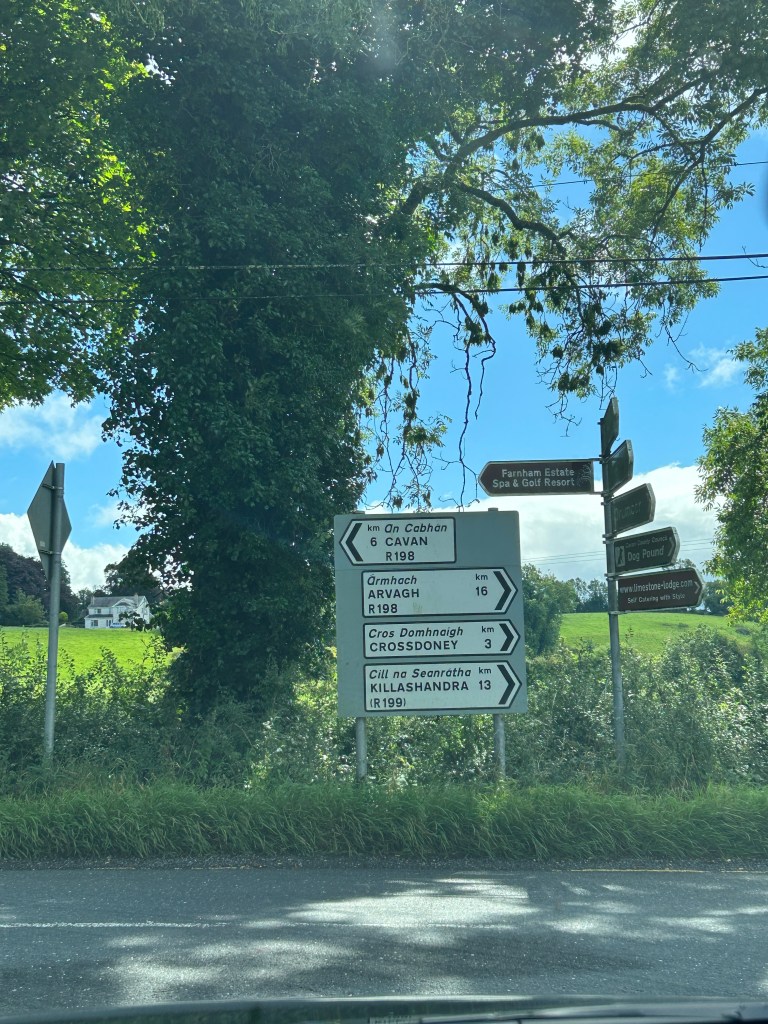
Ann and I walked the paths for 40 minutes, taking note of the names and reading the visual stories while Arjun patiently played in the lanes between the stones. We were searching for our own family – our family home at Drumerdannan was not too far away – but it felt like a long shot that we would know anyone buried there. After some time, we finally set off to Drumerdannan, a short five-minute drive away.

Drumerdannan
Drumerdannan is where Susan Farrelly – Grandpas’s grandmother – grew up. This was part of that sing-song memory key that Grandpa grew up with.
Susan emigrated from Ireland in the late 1890s and ended up meeting and marrying another Cavan immigrant – Andrew Leddy from just north in Drumora – in New York City. Susan and Andrew would marry and start a family in America, having four kids including Bernard Jr. (Grandpas father) who became a NYC firefighter. Look at the genealogy map above again for reference!
Drumerdannan is the town land, or “neighborhood,” where the Farrelly family lived. The challenge of locating an old home is to find the actual structure, which in the late 1890s would have been a small, one-room stone house with a dirt floor that lacked a number like we have in the United States.
This house did exist in 1984 when Jimmy and Charlie were still alive. The question was: did it still stand?
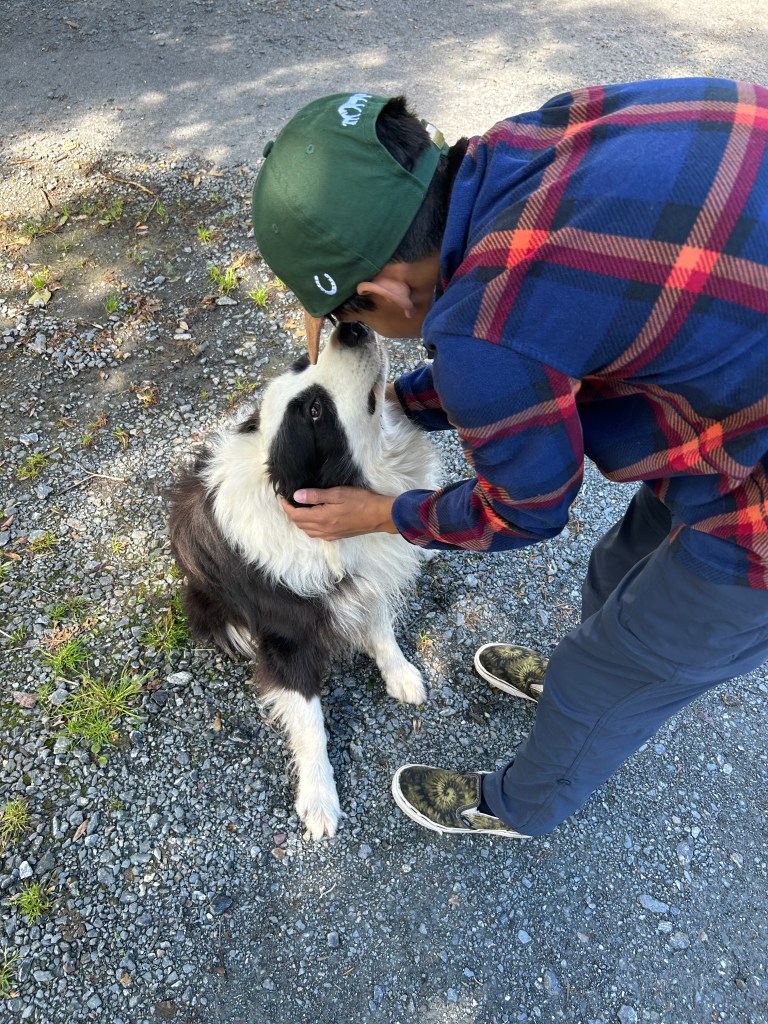
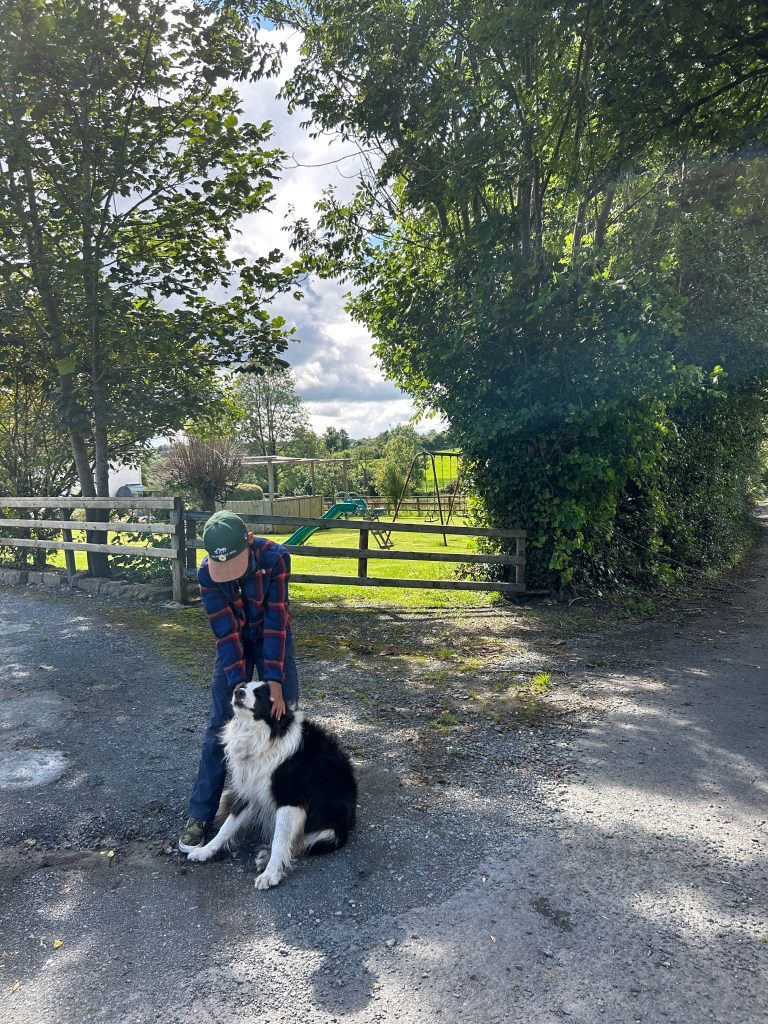
We drove into Drumerdannan and parked next to a house and were promptly met by an exceedingly friendly and adorable dog named Shep. Then a man named Patrick emerged, smiling and curious about our visit. We then got to talking.
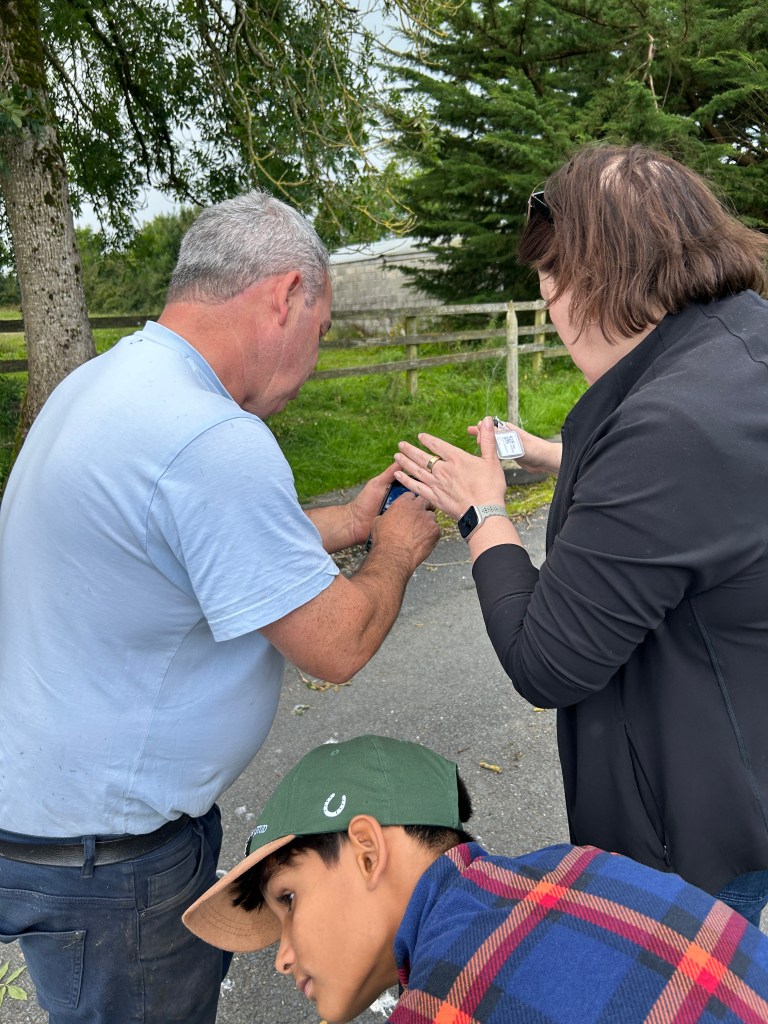
“Hello,” we said, “We are family to Jimmy and Charlie Farrelly. We are trying to find their family home.” We explained a bit of our backstory; Susan, our family in NY, our parents in 1968, our visit in 1984.
“Oh, sure,” he said, his face lit up. “Jimmy and Charlie lived in that house up there, over the hill.” He pointed. And we looked across the field:

Ann immediately recognized it. Patrick then said: “Jimmy and Charlie died a long while back but are buried nearby, you know…just up the road at Drumlane Cemetary, near the old abbey.”
You could have blown Ann and I over with a feather.
We explained that we had just been up at the cemetery, spending time amongst the graves. Patrick offered to take us back and show us where Jimmy and Charlie were laid to rest. We were so grateful because, as it turns out, we never would have found the stone on our own. The headstone is weathered and worn, decades old and unmaintained. No living family remain to care for it.
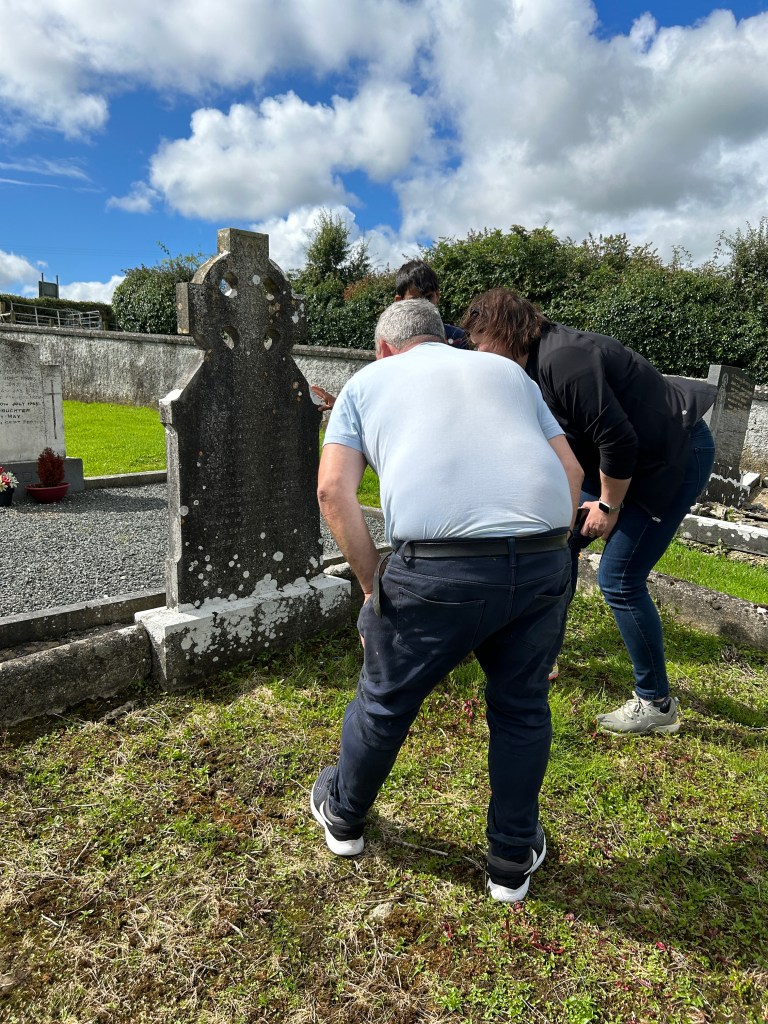
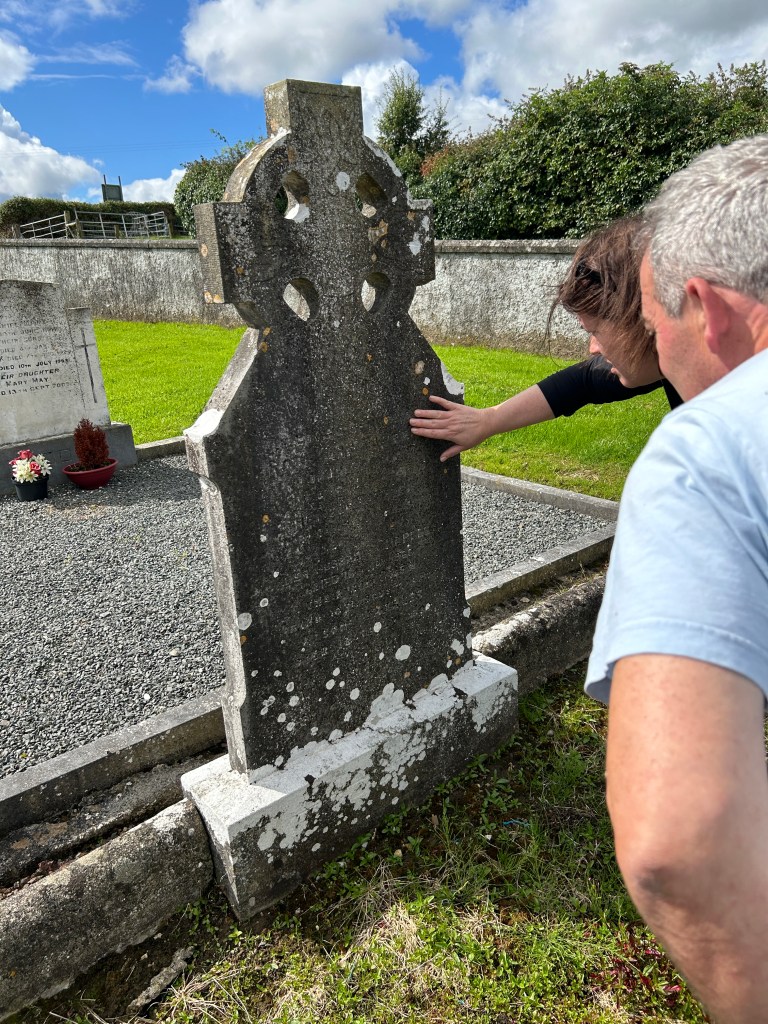

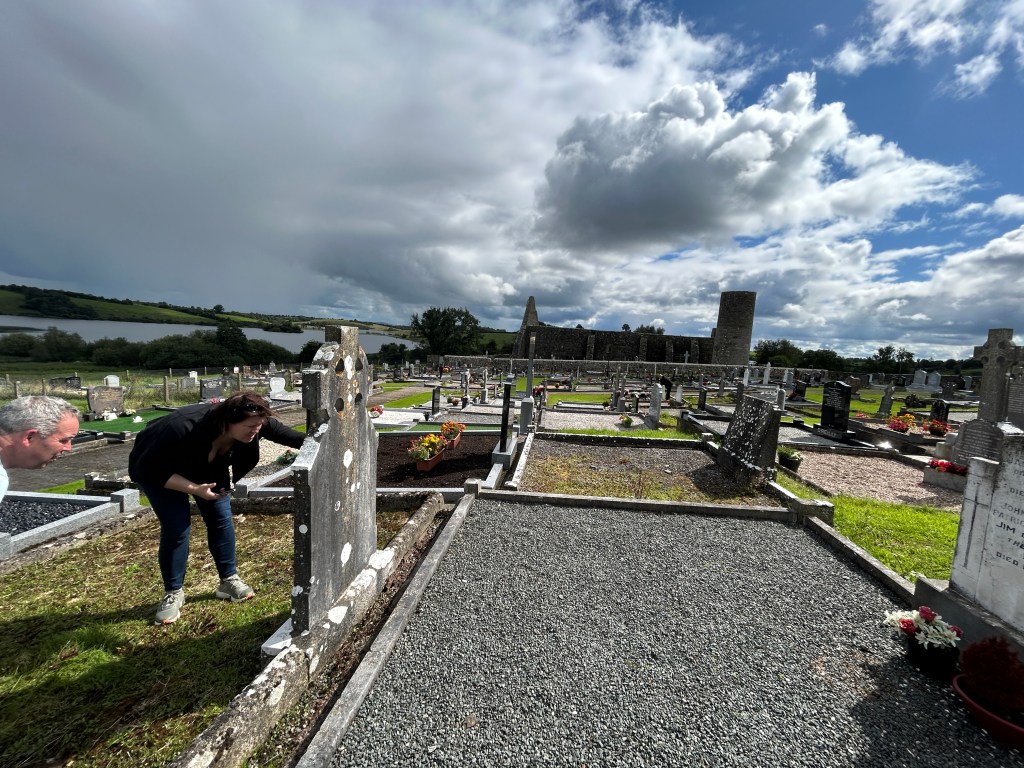
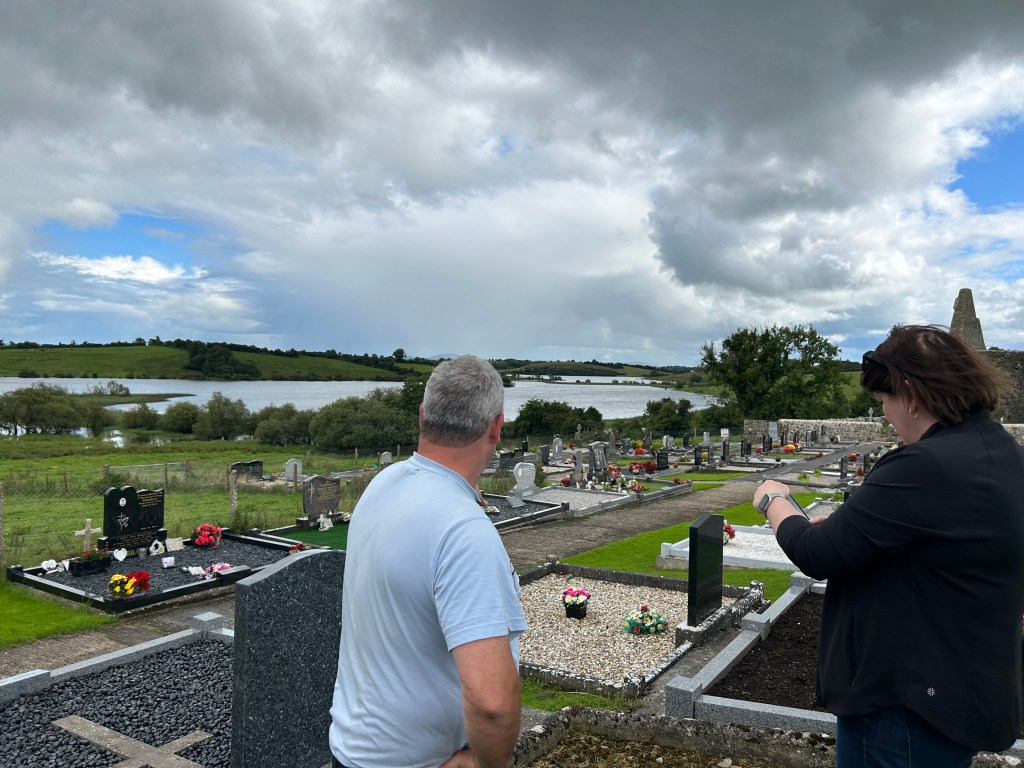
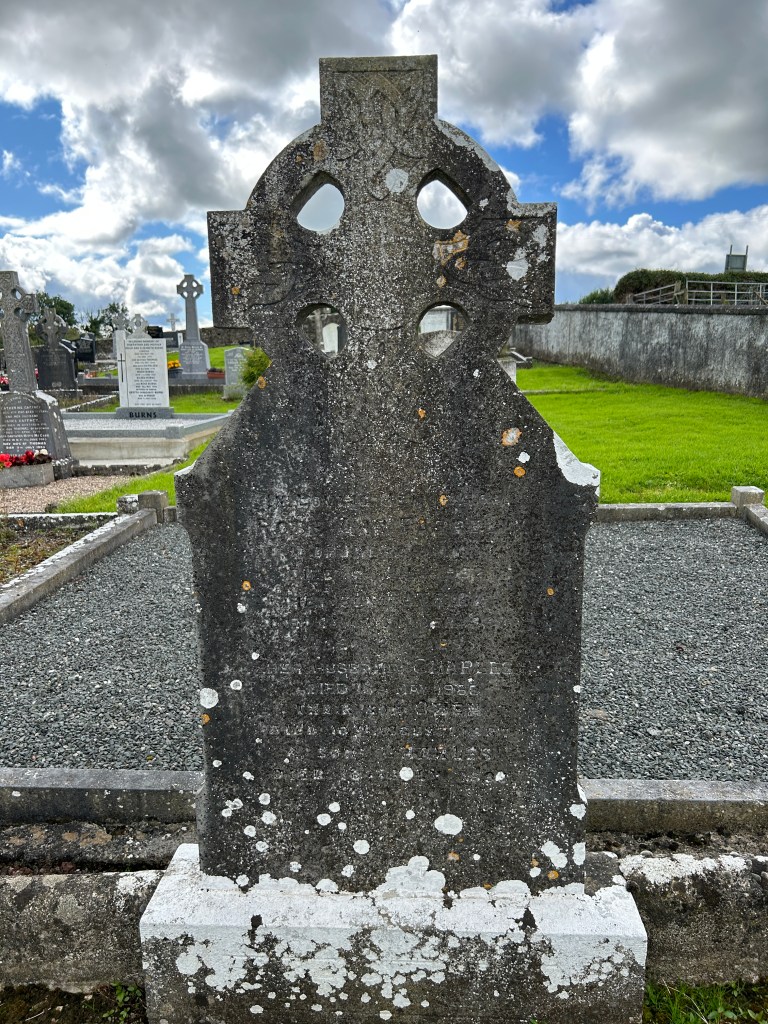
Ann took the time to painstakingly read the fading, etched letters faded into near-obscurity. The memorial reads:
Rose Ann Farrelly
Drumerdannon
Died 1 July 1952
Her son Patrick
Died 16 October 1937
Her husband Charles
Died 15 May 1966
Their son Owen
Died 10 august 1987
& son Charles
Died 16 July 1999
And here is how Ann and I think these people connect to our family: “Her husband Charles” is Susan Farrelly’s older brother Charles, aged 24 in 1901 as shown in the Irish census records:

A note: Susan Farrelly – our great-grandmother – is not shown in the 1901 census records because she would have emigrated in the late 1890s, before the 1901 census occurred. She was around 15 years old at the time, so a younger sister to Charles. Also, she was named after her mother who was 45 years old in 1901.
So Charles – 24 in 1901 – would have been 90 when he died in 1966. He was father to Jimmy and Charlie and older brother to Susan. Mom and Dad never met him or his wife Rose Ann because they died prior to their honeymoon in 1968, when they took a chance to visit Killashandra to find Dad’s long-lost family tree.
So Charlie – who we visited in 1984, died in 1999. Importantly, Patrick shared that two sons are also laid to rest in Drumlane, but not memorialized on the stone: Jimmy (who died around 2008) and John (date unknown). Patrick shared that John had lived in London, been laid to rest in Cavan, and in his will he had donated about twenty thousand pounds to a local facility for the elderly. The oral history as a linkage in this story is so informing.
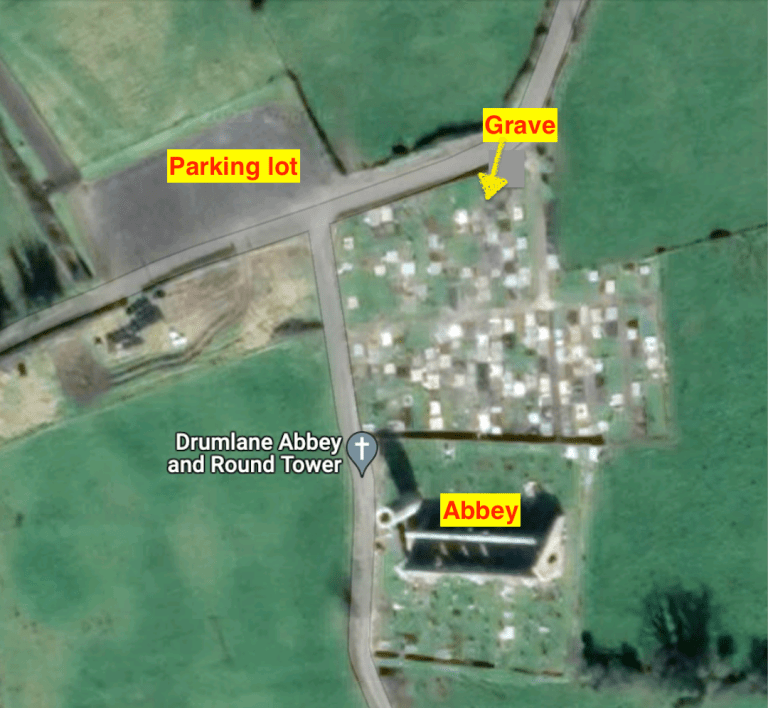
Here is where the family stone sits in an aerial view:
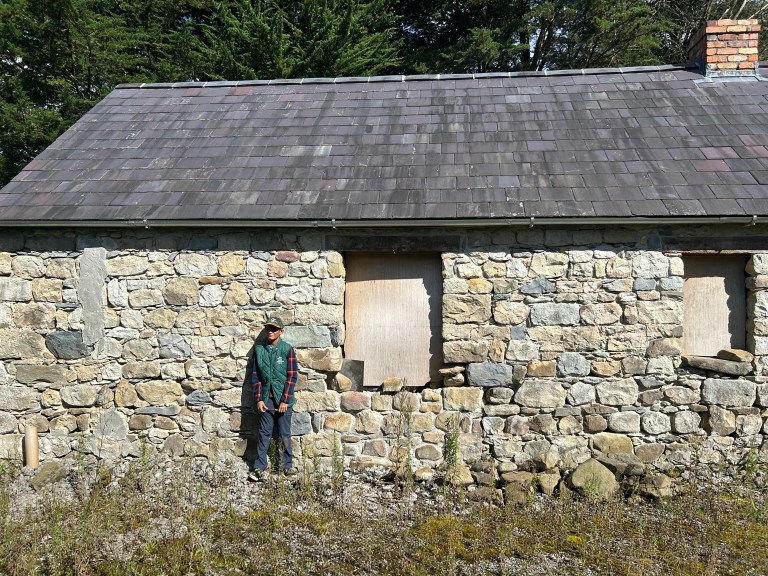
Patrick then took us to the family home in Drumerdannan, where Jimmy and Charlie once lived. Unfortunately, the current owners were not home but we did get a chance to see the original family home and show Arjun where his great-great-grandmother once lived. It was quite a thrill for me because I remember standing inside the house walls in 1984. At that time, the house was crumbling, the roof was long gone, and the stone walls were only waist-high (at that time, Jimmy and Charlie lived in a more modern home on the same property). Here is Arjun in front of the original house, now partially renovated by new owners.
Sharing family ties
It was a good day and we wanted to share it with family back home. Ann and I met a great Cavan friend (and perhaps distant relative) in Patrick and we learned of a final resting place to the Farrelly family tree in County Cavan.

 My Notebook