
While planning this trip, I had imaginative space for our itinerary and so I asked Ann if we could include Kildare. The reason was self-interested in a reflective sort of way; I wanted to visit and learn more about my namesake saint. St. Brigid of Kildare, who lived in the 5th century, was someone whose name I had invoked silently and out loud countless times over my lifetime in the most mundane of circumstances, like…
- On the first day of school, every. single. year.
- At the DMV when getting my license
- On the phone with the bank customer service
The common inflection point was always the spelling of my name. Growing up, no one knew how to spell my name – or rather, everyone by default spelled it incorrectly. This was because Mom and Dad chose to use the Irish spelling of my name – B-R-I-G-I-D – instead of the more common variation used in the U.S., “Bridget.” And, being named after St. Brigid of Kildare, I always referred back to her when explaining my spelling (I assumed, perhaps incorrectly, that everyone knew who she was).
I never resented or felt bad about the constant need to correct others. Rather those countless times I was forced to think about my name’s origin was a time that I thought about, however quickly, St. Brigid of Kildare. This still happens to this day when colleagues misspell my name.
When I’m in Ireland, everyone knows how to spell my name by default and I find simple glee in that; it’s a small convenience but one with a meaningful cultural connection.
So we put Kildare on the list of spots to see and enjoyed walking around the town on Friday morning.
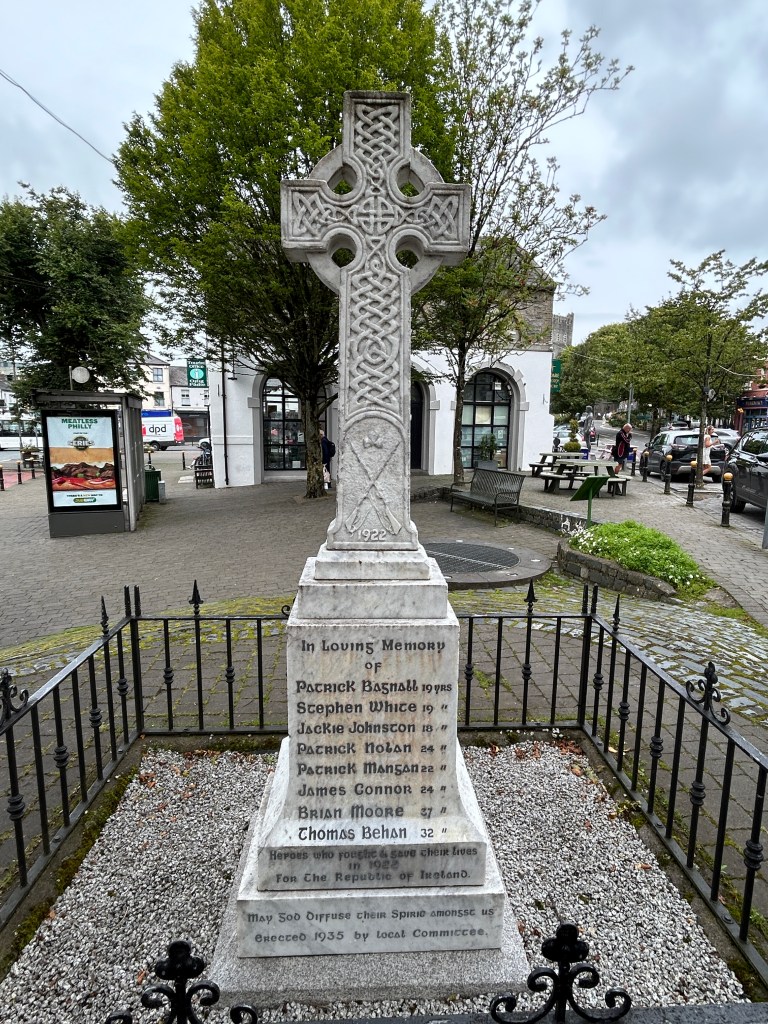
The Cross from 1922
While walking towards the heritage house, we happened upon a Celtic cross in the middle of town dedicated to men who had died in 1922, presumably from the Revolution or the Civil War (it was not clear which from the inscription). This was moving to us because we had been so steeped in learning Irish history while in Dublin; absent that experience from the past few days, we may not have appreciated this cross.
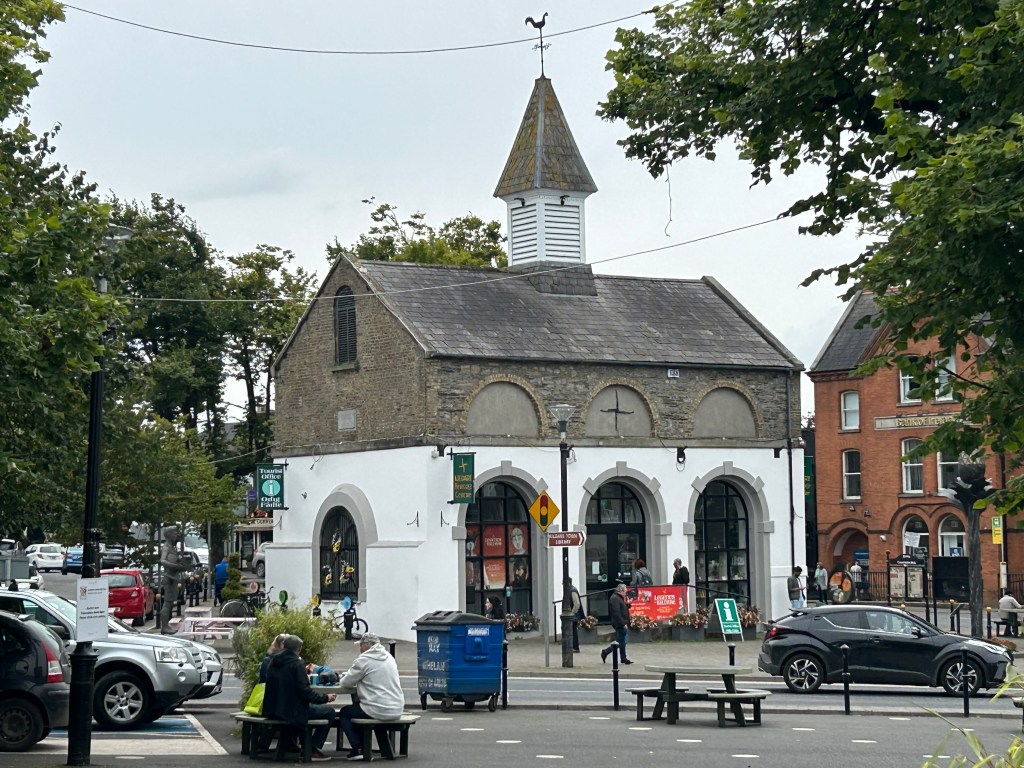
The heritage house
When then saw the heritage house located in the middle of Kildare town, and the docent inside could not have been friendlier. She made time to introduce herself, show us the exhibits, and give a well-rounded history of the saint.
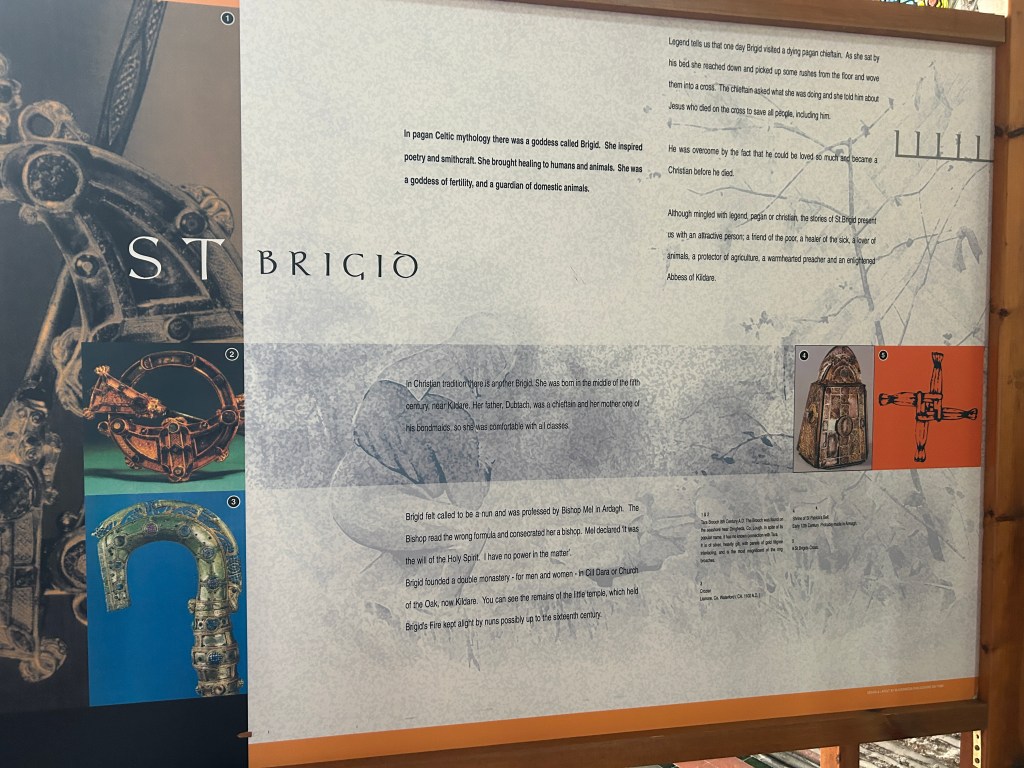
We were interested to learn that:
- Saint Brigid obtained a heightened status in Ireland in 2023 when her feast day (Feb 1st) was first bank holiday to be named after a woman
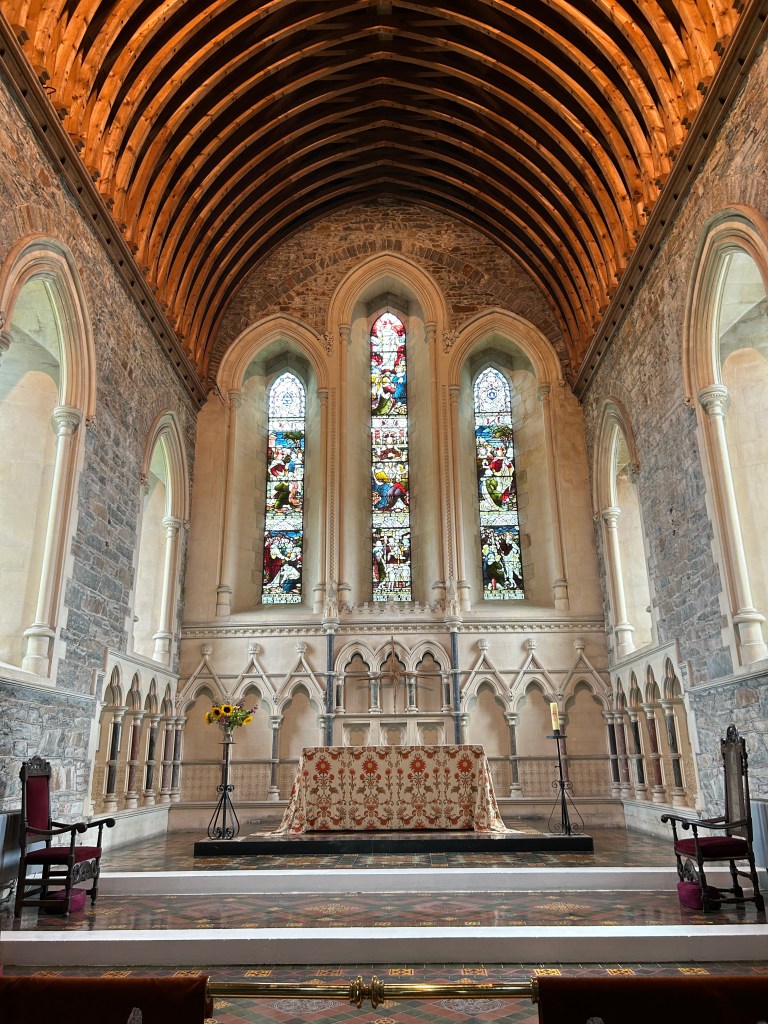
- The cathedral (picture below) is the spot where Brigid herself first built a wooden structure and related buildings in the 5th century
- I had heard this before, but it was articulated in more depth than I had heard before: that Brigid was a healer
The heritage house has infographics on the wall chock-full of facts and context about Brigid including a fantastic timeline showing events happening parallel in Kildare, broader Ireland, and Europe-wide:

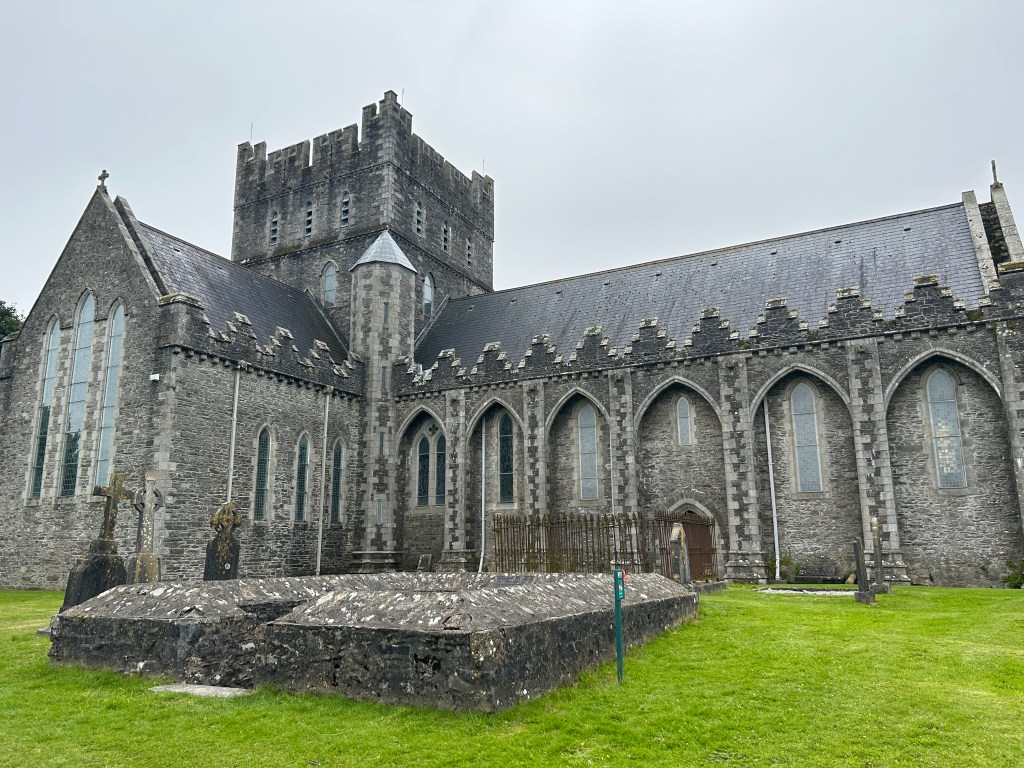
St. Brigid’s Cathedral
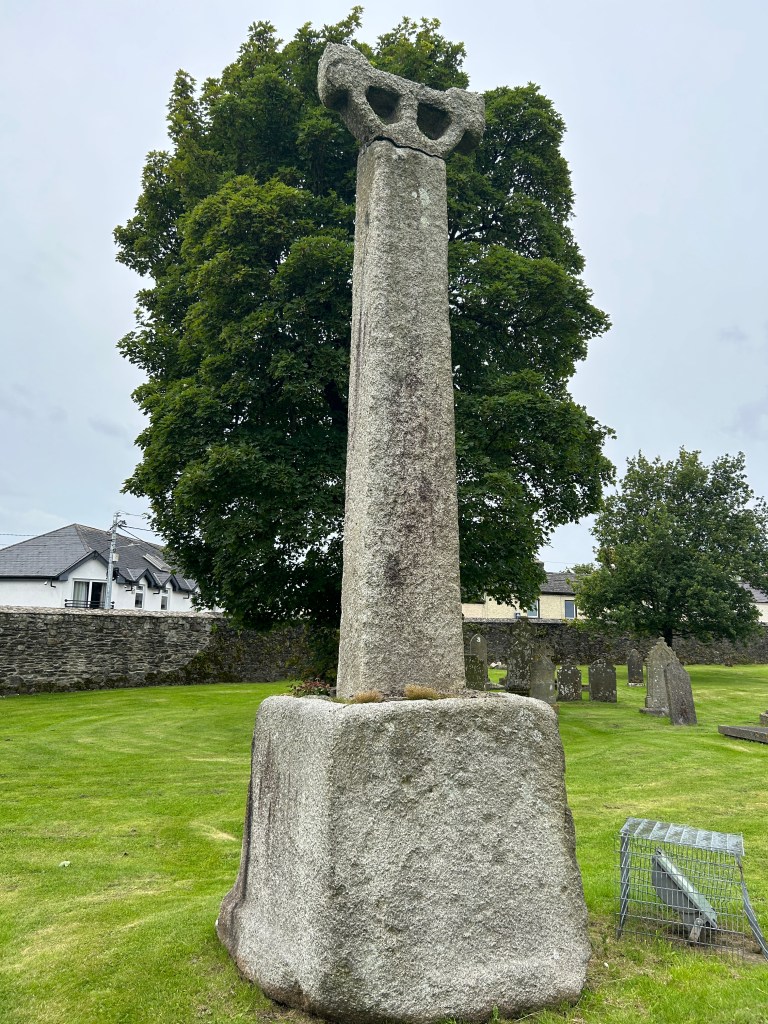
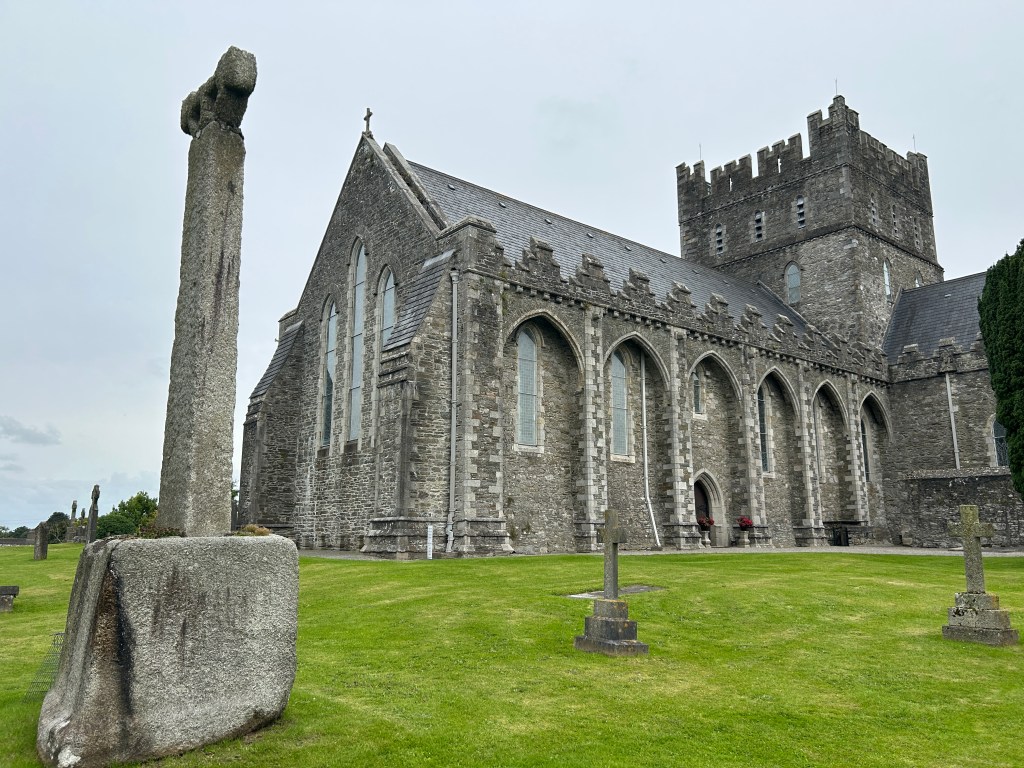
We also saw the cathedral, a massive structure hidden beyond some of the town shops. It’s actually only about a hundred years old but it stands on the original site of where St. Brigid’s lived and worked in the 5th century. We were able to visit inside and also walk around the grounds where we also saw the site of an original fire temple. Brigid was a contemporary of St. Patrick and would have lived with both Celtic and Christian cultural customs.

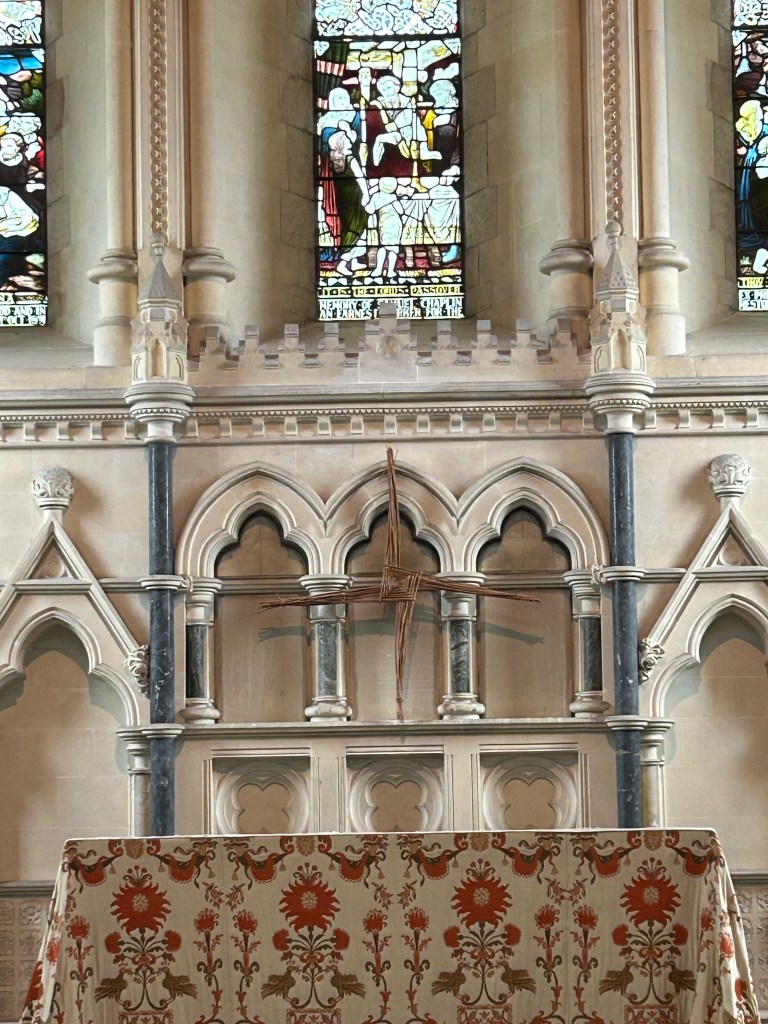
I enjoyed seeing the St. Brigid crosses throughout our visit. It was cool to see them in spaces that we are not used to seeing them in back home, including and especially the alter in the cathedral; that was a simple and dominant reflection of her impact. Also, the cross itself was huge, the biggest St. Brigid cross I had ever seen.

The grounds around the church were dotted with gravestones and other markers that marked the passage of centuries.

All in all, it was a short but very enjoyable visit. I purchased a book about St. Brigid and look forward to learning more about her. For now, this quick visit was a wonderful introduction to my namesake saint.
 My Notebook