The Kilmainham Gaol tour is so exceptional that you have to book a month in advance or hope to secure cancelled tickets the day before. I missed the month-ahead window so was excited when, a day before we were due to arrive in Dublin, I secured three tickets.
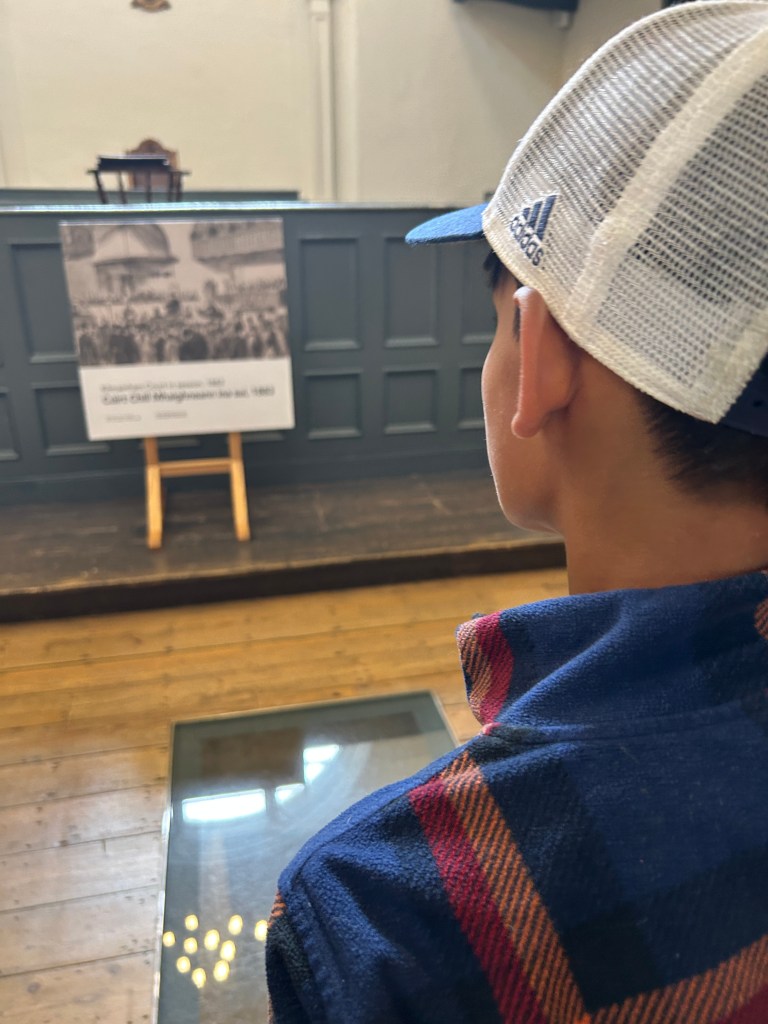
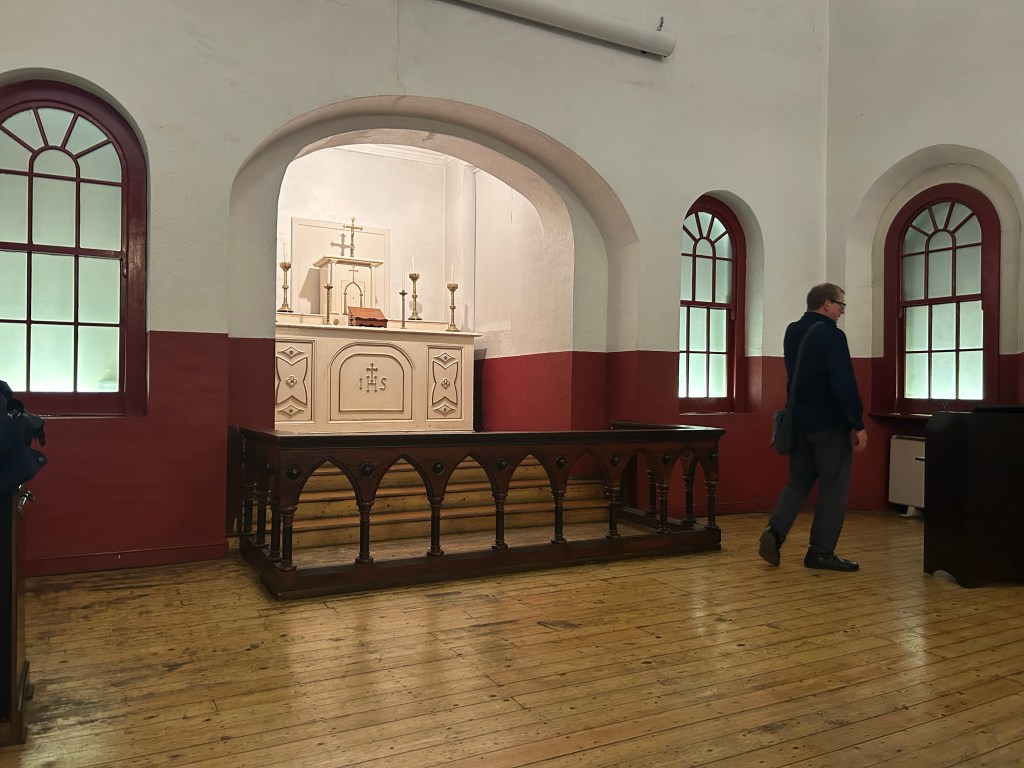
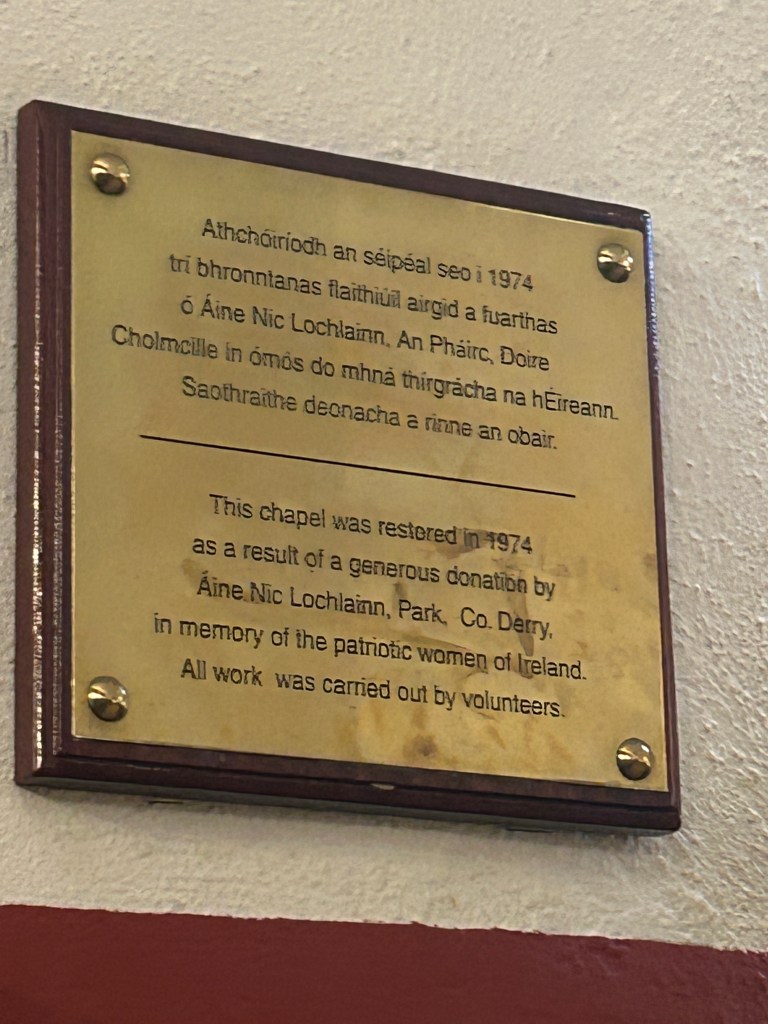
The tour started in a civilized looking courtroom followed by a recently renovated chapel*, but it quickly transitioned into the darker and more sordid history for which the jail is now known: top-down punishment of criminals small to big…from little kids stealing bread to rebels inciting a revolution. The tour is, in a way, space for reflection on how some of the dots of Irish revolutionary history connect.
*I took note note of the fact that the chapel was restored entirely by volunteers which I thought was so admirable
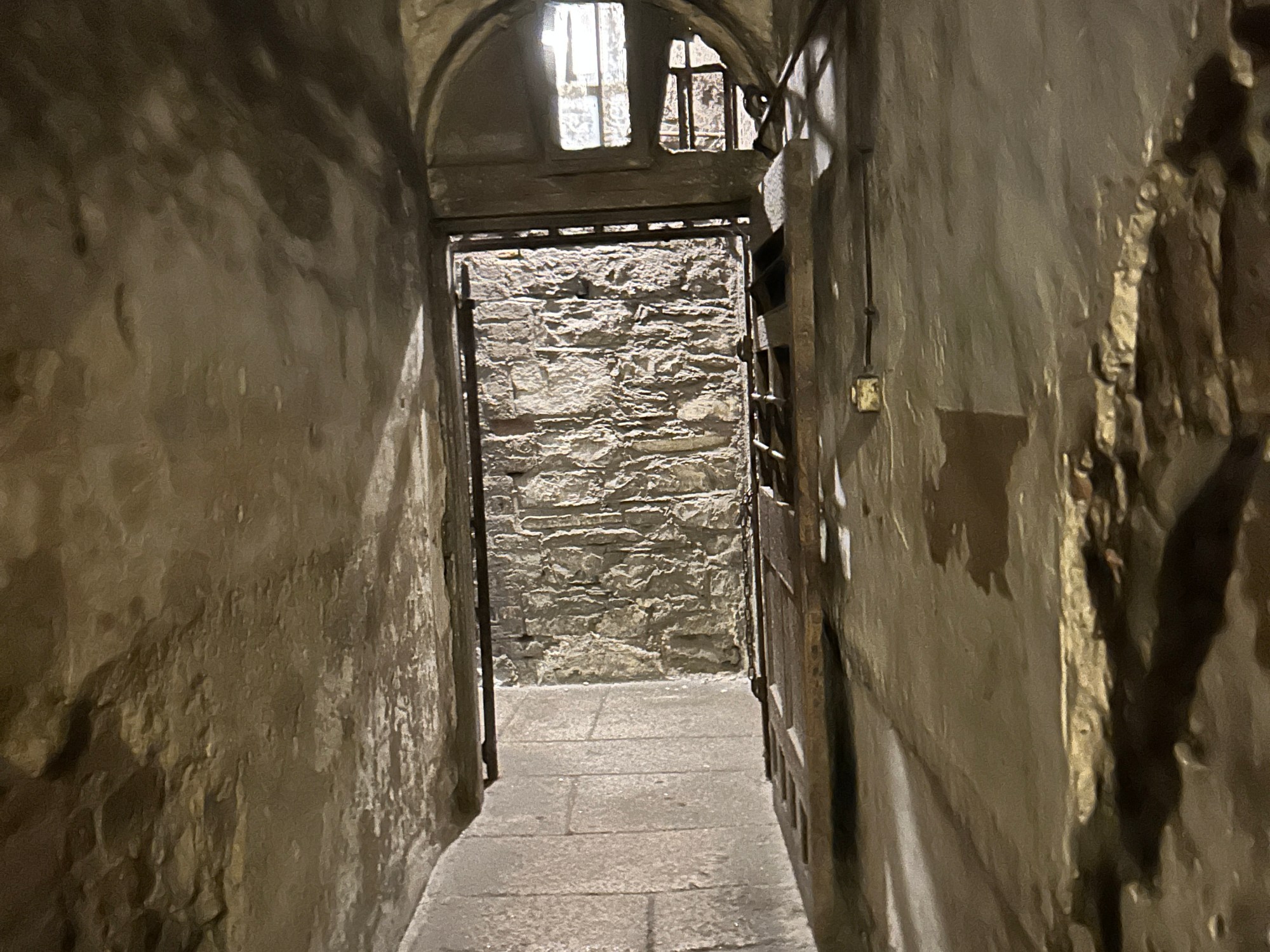
After the chapel, we were then taken into smaller, cavern-like hallways of the prison which our guide, Mick, explained were deliberately cramped to limit movement of those held captive. Doorways were deliberately shorter; hallways fit for only one or two persons wide at a time. This was to constrain any imagination or related machinations around a prison riot or other illicit activity. It was so interesting to learn this after having to wait in line behind 25 other tour members, slowly trudging forward in small footsteps with nothing to look at aside from bare walls of chipped cement and bleak, faded paint.

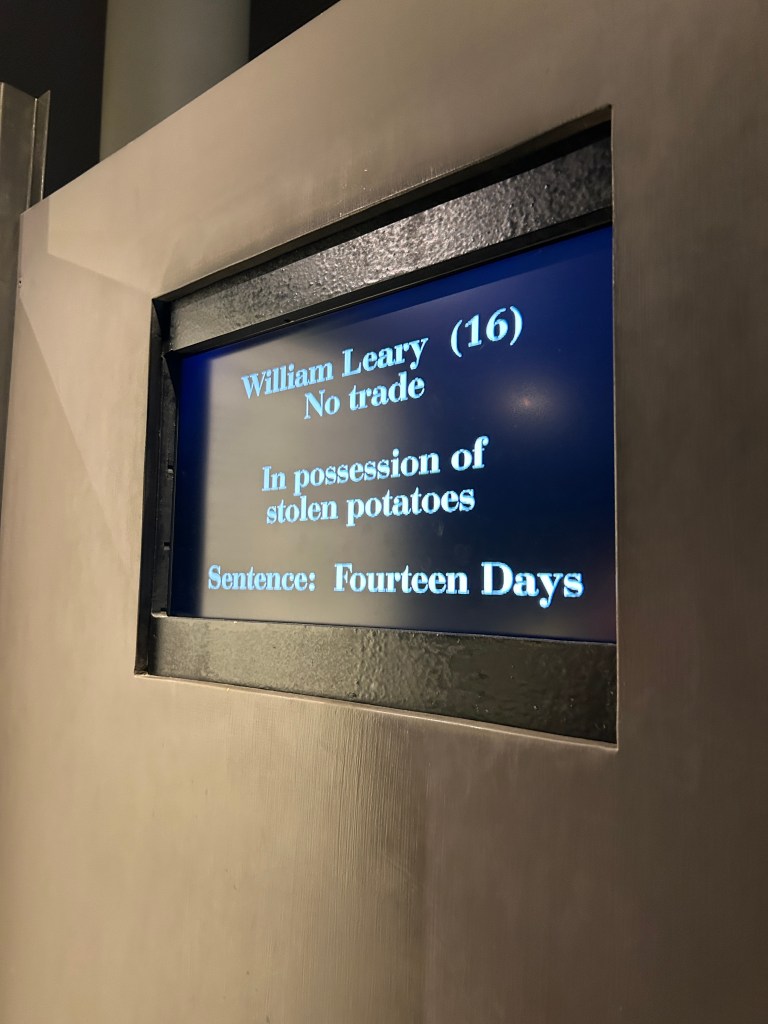
The rooms were also small, intended for one prisoner at at time, each person kept in complete isolation of the others on the cell block. There were exceptions, like when the prison was overfilled as a waiting station for poor souls being punitively sent away from home to places like Australia. Above some of the rooms were placards with names of notable inmates who had once stayed there, including some of the 1916 martyrs (a more inclusive accounting of prisoners was part of the three-floor multi-media museum exhibits that we saw after the tour ended).
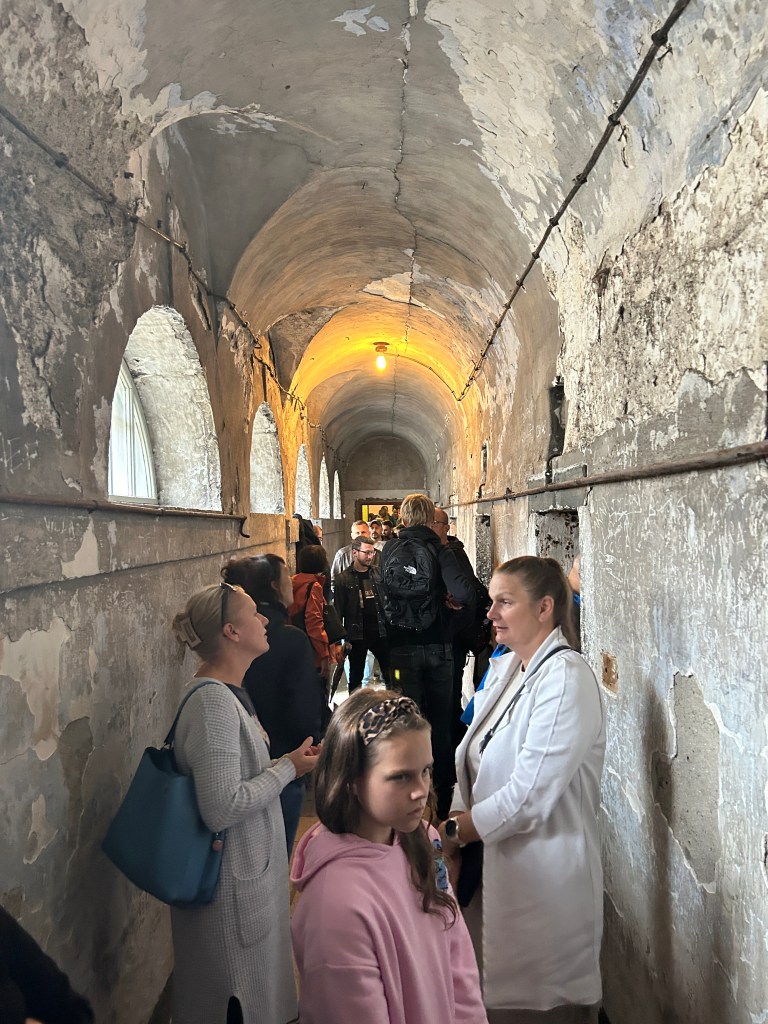
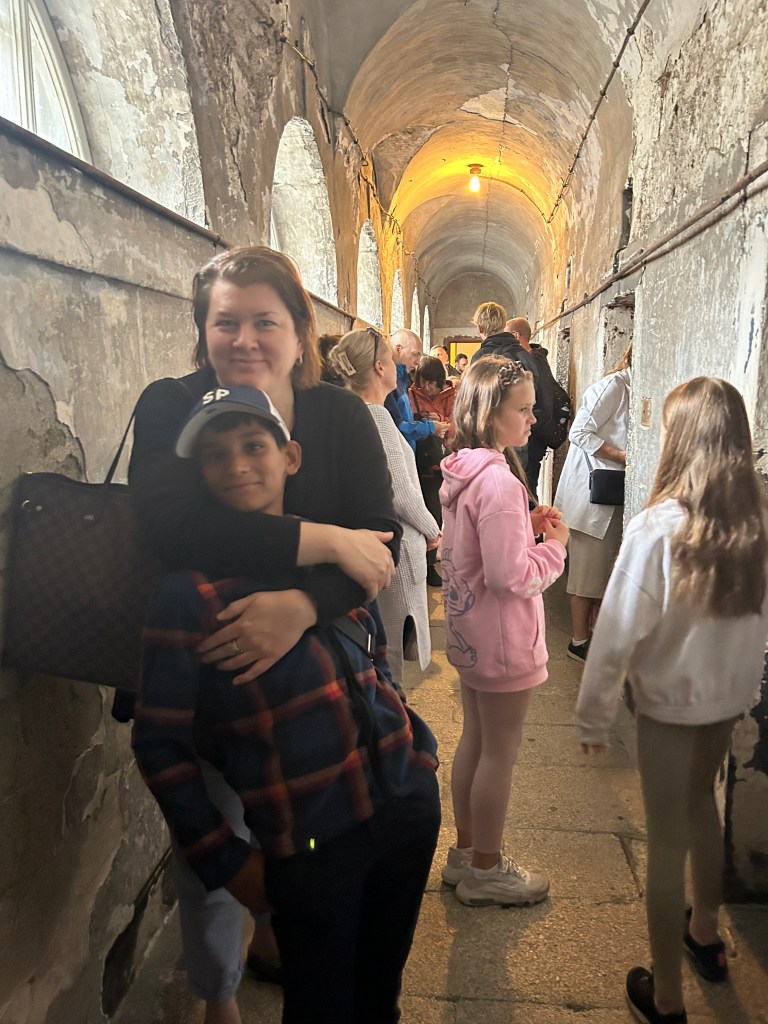
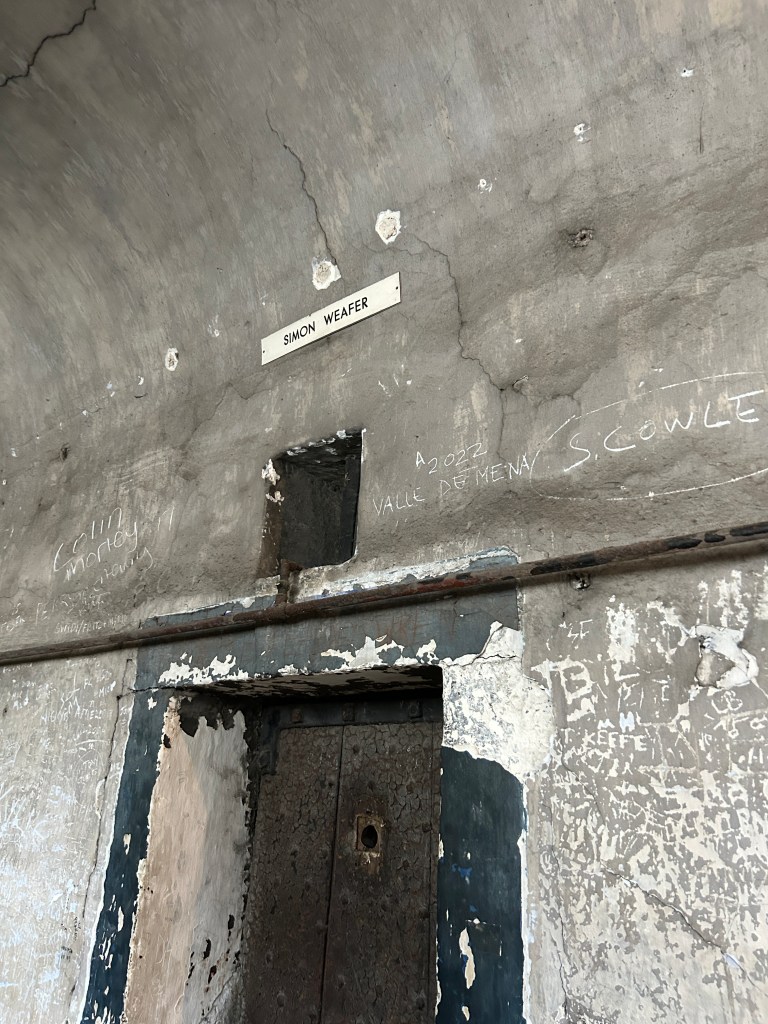
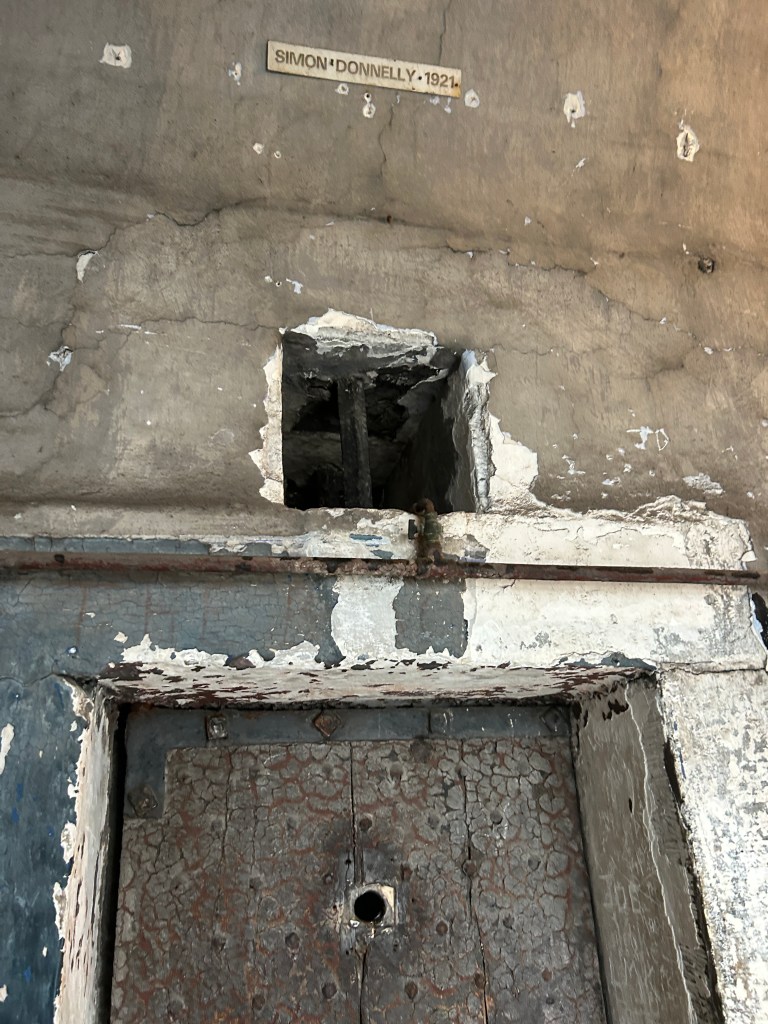
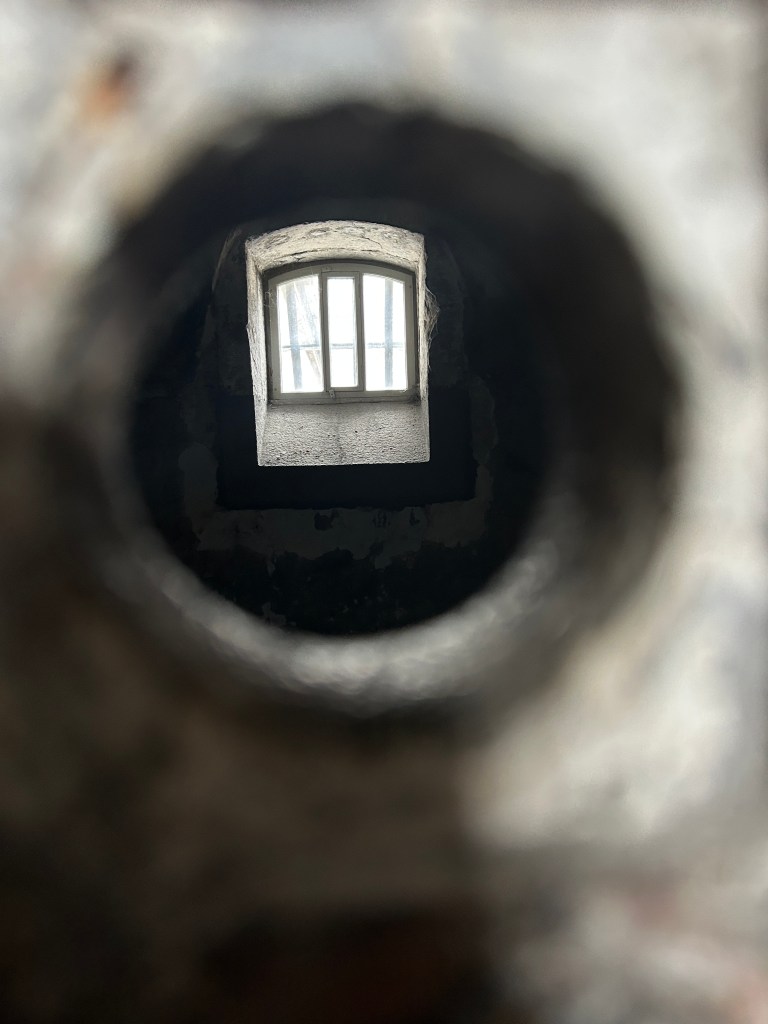
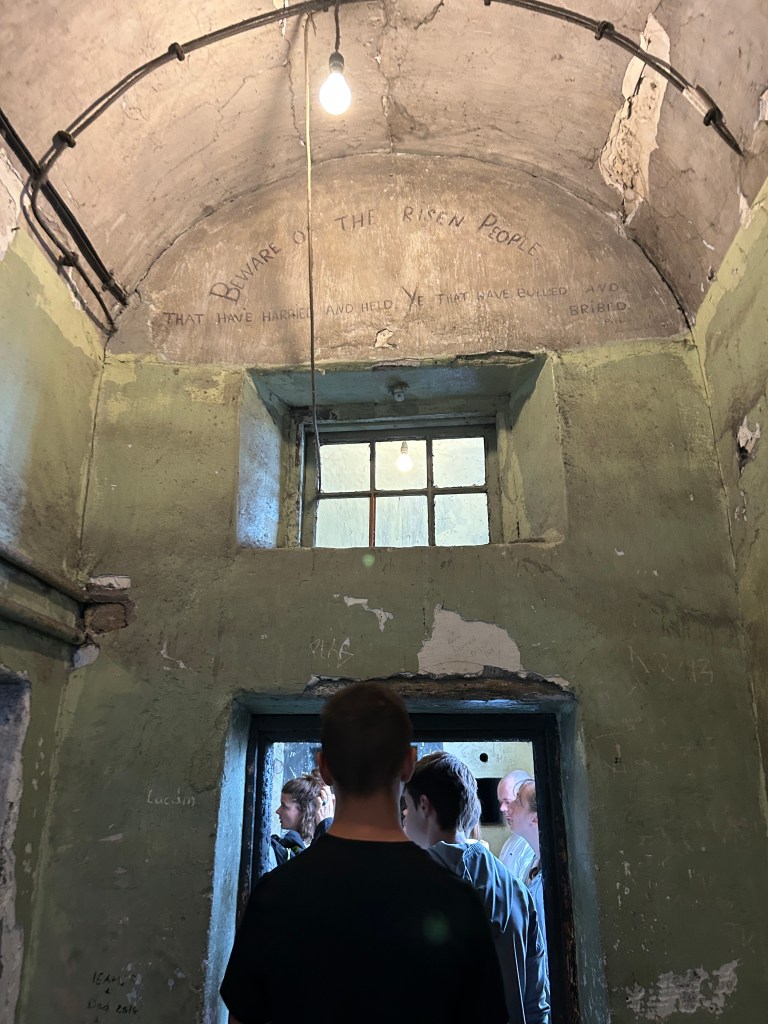
We saw the courtyards – one for the adults and one for the kids – where prisoners were made to walk in single file and disallowed from interacting with one another. Each captive had one hour outside a day, then back into confinement. The entire system was designed to crush a person from breaking the rules again; from small crimes like stealing potatoes or a loaf of bread to big crimes like inciting the 1916 Rising. Our tour guide Mick was keen to connect the history of Kilmainham Gaol with the modern prisons we still have today, and the failings that persist around ideals of “rehabilitation” and realities of distorting humans and worsening their condition through failed prison schemes.
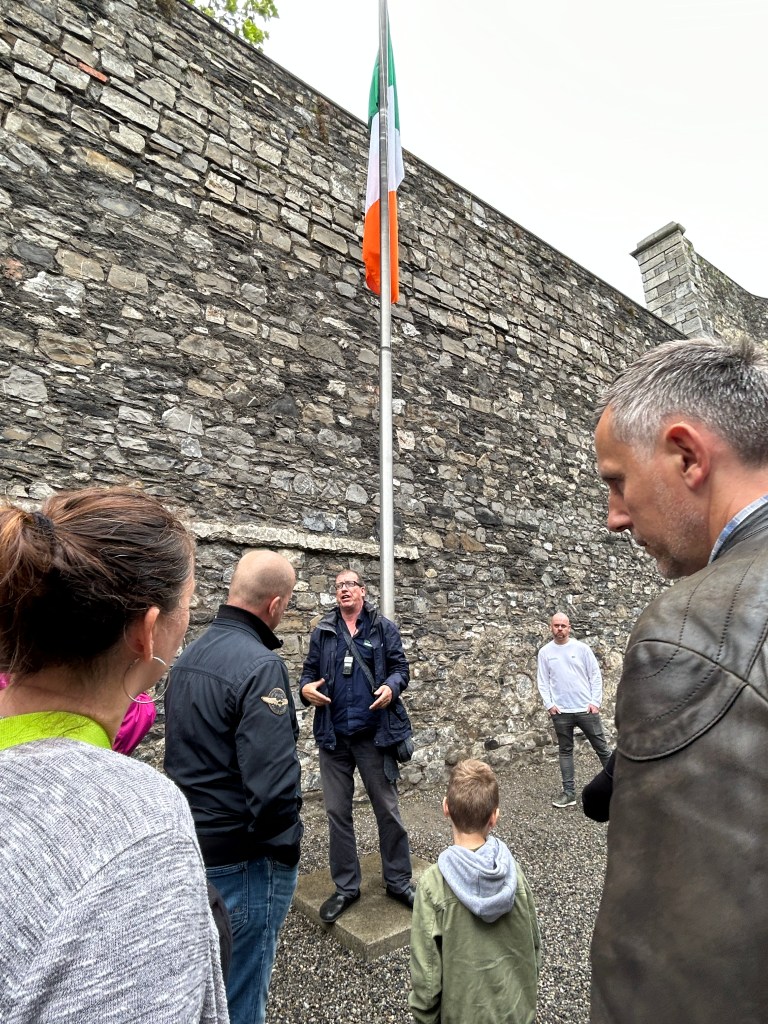
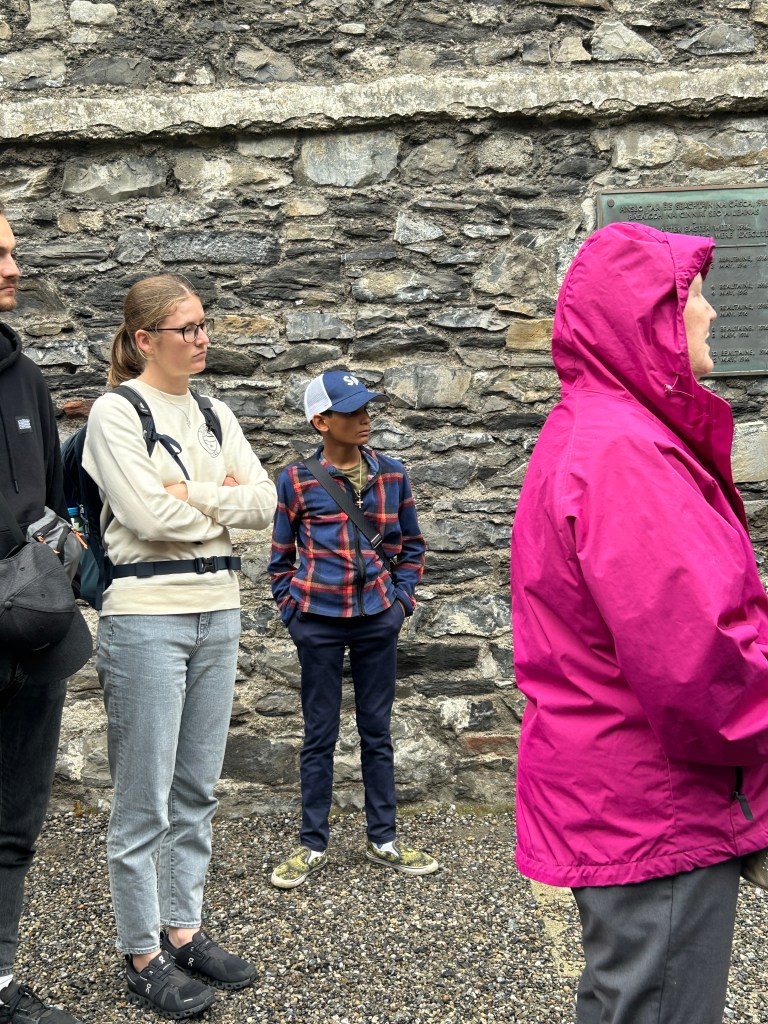
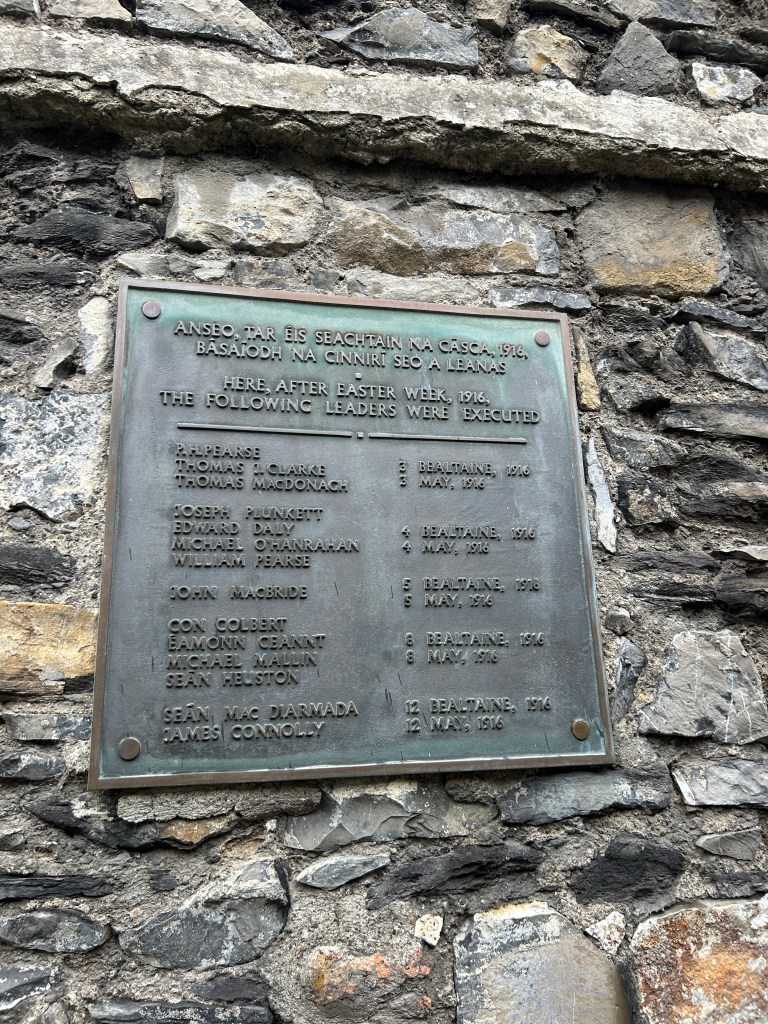
Finally, we saw the courtyard space where 14 revolutionaries from the 1916 Easter Rising were executed. There are two crosses marking the spots where they were shot; one cross is for the inured James Connolly who had to be transported from a nearby medical facility due to injuries sustained during the fighting and another cross for the 13 remaining Rising leaders held at Kilmainham. A plaque on the wall bears their names and an Irish flag stands tall in the courtyard. Aside from the plaque, the flag, and the two crosses, the yard is bare, allowing visitors to feel the callous, historic utility of the place. Mick brought emotion to the significance of the space, explaining how the executions transformed the revolutionaries into martyrs and sparked a larger swell of support for the cause they each died for.


 My Notebook